Kigali
2January 8, 2013 by vickimrichardson
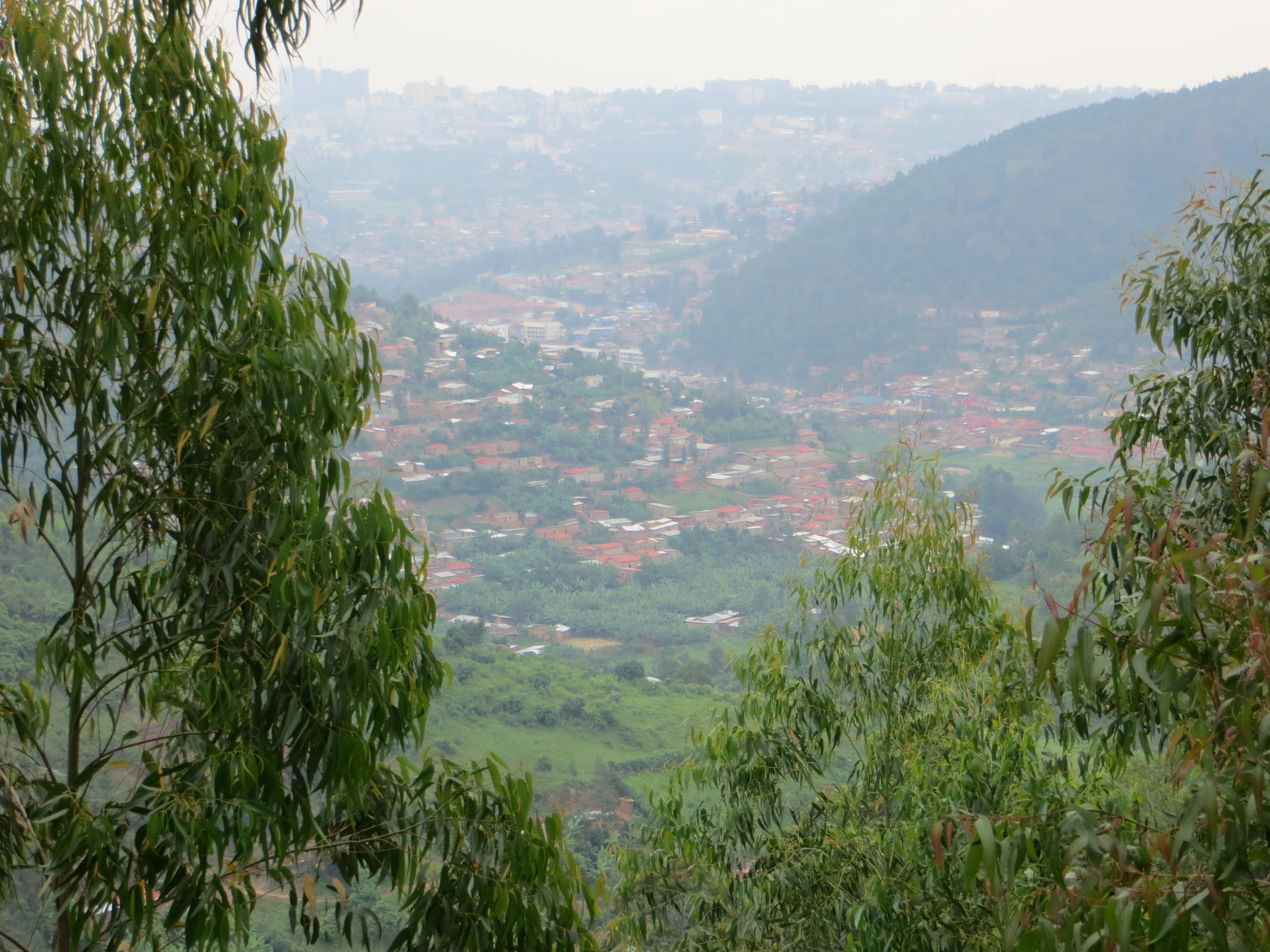
View of Kigali from Highway Approaching City

Clothing of Genocide Victims Recovered From Shallow Graves Where Bodies Were Dumped
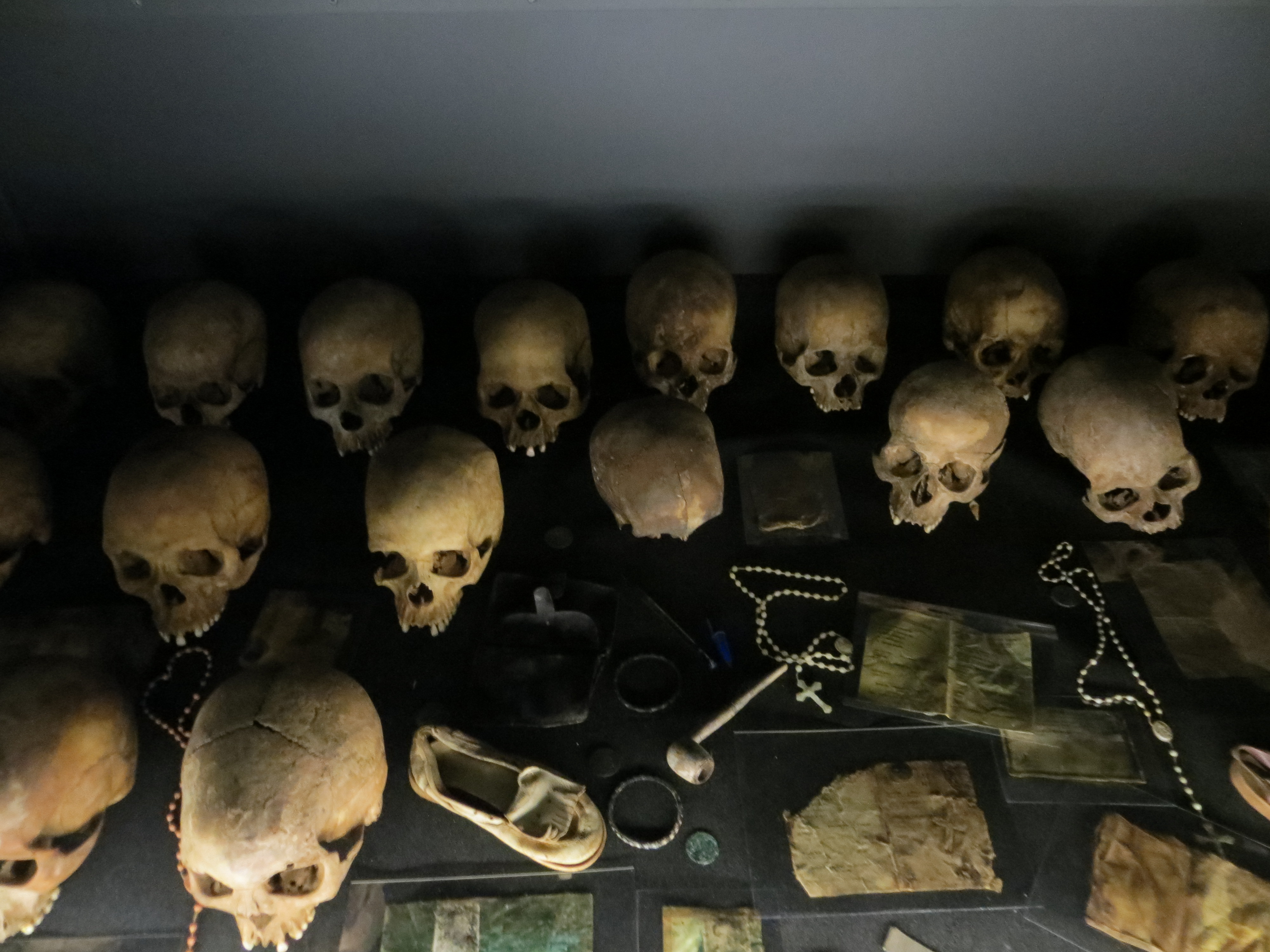
Skulls and Belongings of Murdered Tutsi People

Mass Graves at Genocide Memorial Museum

Hotel Rwanda

View of Kigali from Hotel Rwanda
Another 2-hour ride, but thank goodness it was paved road all the way. I think the cratered road to the gorilla trekking site is what damaged the car. I don’t want any problems making my fight to Nairobi tomorrow. I am running low on cash because none of the ATMs in Rwanda will accept my Citibank debit card, which also doubles as a Master Card, but the banks only accept Visa check cards. I met an American at the post office who bid me good luck. So many US citizens with Citibank cards could not access their cash. I did find a bank that would give me a cash advance against the Master Card and charge me a 4% commission fee on the total amount taken. Sorry, but I am not going to pay a 4% fee to access money in my checking account. Forget it; I will wait until I hit Nairobi to take out money. I am only here one day and the Hotel Serena (http://www.serenahotels.com/serenakigali/default-en.html), where I am staying, accepts my card for payment. I prefer using my bank card because I do not have to pay any fees. Oh well, if I cannot find it in the gift shop or room service – I don’t want it. My cash flow problem did cut out one activity – a visit to the craft center.
Before leaving Musanze (the town where I trekked gorillas), we stopped at the agricultural market to look around. It was quite a busting outdoor market. Not only did it have lots of stalls with vegetables, but it also had cleaning supplies, cooking supplies and utensils, clothes, and luggage and bags. There was also an alterations section where a group of women sat at sewing machines repairing peoples’ damaged clothing or making new clothes to order.
We left the market and continued our drive to Kigali. It was a lovely scenic route and we stopped several times so I could take photos of the flora y fauna. We drove by the Barongo River, which flows into smaller rivers that connect to Lake Victoria. Many victims of the genocide were dumped in this river and the bodies popped up everywhere causing people to stop eating the tilapia fish because they feared the fish had fed on the remains of the victims.
Kigali is quite a clean, beautiful, and well organized city. It is built on a series of hills giving the urban center a nice multi-level effect. The streets are a series of interconnecting circles and loops. I am sad to say I saw a lot of German cars on the road. I would hope the citizens of Rwanda would boycott all German and Belgian products for that matter given all the trouble they caused in dividing and creating hatred and distrust between the Hutu and Tutsi people. BUT what is a black person without a BMW or a Mercedes Benz??? A black person with a lot more money in his pocket perhaps
My first stop in the city was the Genocide Memorial Museum. I must say it was as chilling and saddening as my visit to Auschwitz and Birkenau in Poland. The museum had three exhibits: the first provided a series of photos and explanations of how Rwanda was before colonial rule. The various clans were outlined: the Twa (Batwa people who lived in the forest), the Hutu (who were the farmers), and the Tutsi (who were the cattle owners and the wealthiest of all groups). The Hutu was the majority, followed by the Tutsi and then the Twa. Although, the Tutsi were the minorities, they dominated the monarchy of the land due to their wealth. All tribes lived together in peace and the distinctions were more in terms of status and wealth. A member of the Hutu clan could declare himself Tutsi if he gained great wealth and cattle. They intermarried and all was good until the Germans arrived in the 1890s.
The Germans took control of the country because they realized the great mineral deposits Rwanda had to offer. They made racial distinctions between the Hutu and Tutsi stating that the Tutsi were more like Europeans because of their height and longer noses and lighter skin. In 1923, the Belgians took over control from the Germans by a League of Nations declaration giving them power. The Belgians began issuing ID cards that the Rwandan people had to carry. The ID Cards identified you as either Hutu or Tutsi. The Belgians went to great lengths even giving blood tests to determine one’s proper status. The Tutsi people received more privileges and opportunities than the Hutu, who the Belgians considered inferior.
After elevating the Tutsi to a superior level for years, suddenly the Belgians switched alliances and installed a Hutu in charge of the monarchy in 1960. The Tutsi became suspicious because they were losing power and control, which they had had for many years. In 1961, the people wanted to put an end to the Monarchy and in 1961 the Hutu were the first to seek independence for the Belgians; that same year, the Tutsi also sought independence. In July of 1962, Rwanda got its independence and became a Republic with elections.
The first elected president was Kayibanda from the Hutu clan. The Tutsi became upset because they were losing power and because they were in the minority electing a Tutsi president was nearly impossible. Then in 1973 the presidency shifted to Habyarima, a Hutu. The Tutsi formed the Rwanda Patriotic Front to rebel against Hutu control. Discrimination and distrust between the two groups was rampant. The Habyarima regime took to setting rules for Hutus not to trust, associate, or do business with Tutsi, referring to the latter as cockroaches. If Hutus married or befriended Tutsi they were an enemy of the state. Murders of the Tutsi were going on but not in as large numbers as after the death of Habyarima in 1994 when his plane was shot down and the Hutus blamed the Tutsi for his death. The government then began a propaganda movement to encourage the Hutu to cleanse the country of Tutsi cockroaches. A militia of Hutu teenagers was formed by the government to help kill the Tutsi (very similar to the Red Army in China). Hundreds of thousands of Tutsi people were murdered as the international community stood by doing nothing to help or quell the mass murder of the Tutsi people.
When the government was weak in the 90s, the Tutsi who had fled came back and Kagame, head of the Rwanda Patriotic Front, ceased control. Bizimungu, a Hutu, was made the new president and Kagame became the Commander and Chief of the Army. But the Bizimungu presidency was riddled with corruption leading to Kagame taking control and he is still president today.
The museum’s second section focuses on the adults and children who were murdered. There are photos everywhere and explanations of how the people died. The most moving is the pictures of the children because descriptions of their favorite food, and favorite activities, and what their hopes or dreams were. I just stood there looking at their faces and wondering what their lives would have been like if this atrocity had not taken place. There is a room with the actual clothing and belongings recovered from mass grave sites. There is a room full of bones and skulls recovered from mass burial sites where the Hutu had dumped bodies. There is a description of the country at the time stating that the air was thick with the smell of decaying flesh.
There is also a room dedicated to other genocides that have taken place. The hope of the museum is to make people aware and stop any future massacres and ethnic cleansing.
The third section of the museum is outdoors and it is a series of huge concrete slabs marking the mass burial sites of the Tutsi people. There are three levels to and each surrounded by beautiful gardens and fountains.
The exhibits are very powerful. I am always surprised at just how low the human race can sink. After spending hours in the museum just looking at all the faces, I cannot imagine where the desire comes from to rape and mutilate a person. And we’re supposed to be civilized – I’ll stick with the primates.
Next we went to the Hotel Rwanda, actually named Hôtel des Mille Collines. It is pretty much the same as it was at the time more than 1000 refugees found a safe haven there when the manager Paul Rusesabagina saved them from certain death by bribing the Hutu with money and alcohol. There is no mention anywhere in the hotel about what happened. It is business as usual.
I was going to go to a craft center, but my inability to access more cash ended that proposition. So I decided to go back to the hotel and write and use the Internet and order over-priced room service. Thank god the hotel takes plastic.
Tomorrow, I go to the airport to catch an 11:30am flight to Nairobi.

 Pack Your Bag and Go!
Add me PLEASE!
Vicki,
John and I were intrigued about the Hotel Rawanda movie; and yes, it was such a sad thing to happen but after reading your blog, it makes a lot more sense because of the politics involed. Thanks for explaining some of that. Why do people have to hate others; why can’t they live in peace and accept others beliefs. You know that the elections this year in our own country were some of the nastiest we have ever had; why don’t each of us have a right to believe what we believe and accept our neighbor’s differing beliefs without such nastiness and criticism. No one is happy living next door or in a community with hatred and biggotry. At least, except for Civil War, Americans seem to have lived in peace with their neighbors who have differing beliefs. I know this does not occur 100% but at least I don’t think our country has had disputes that led to such horrendous attrocities as in Rawanda. Hope I get to read more details of your trip and esp. about th gorillas/apes, etc. Carol & John Anderson