Mahale – Day 1
Leave a commentFebruary 12, 2015 by vickimrichardson
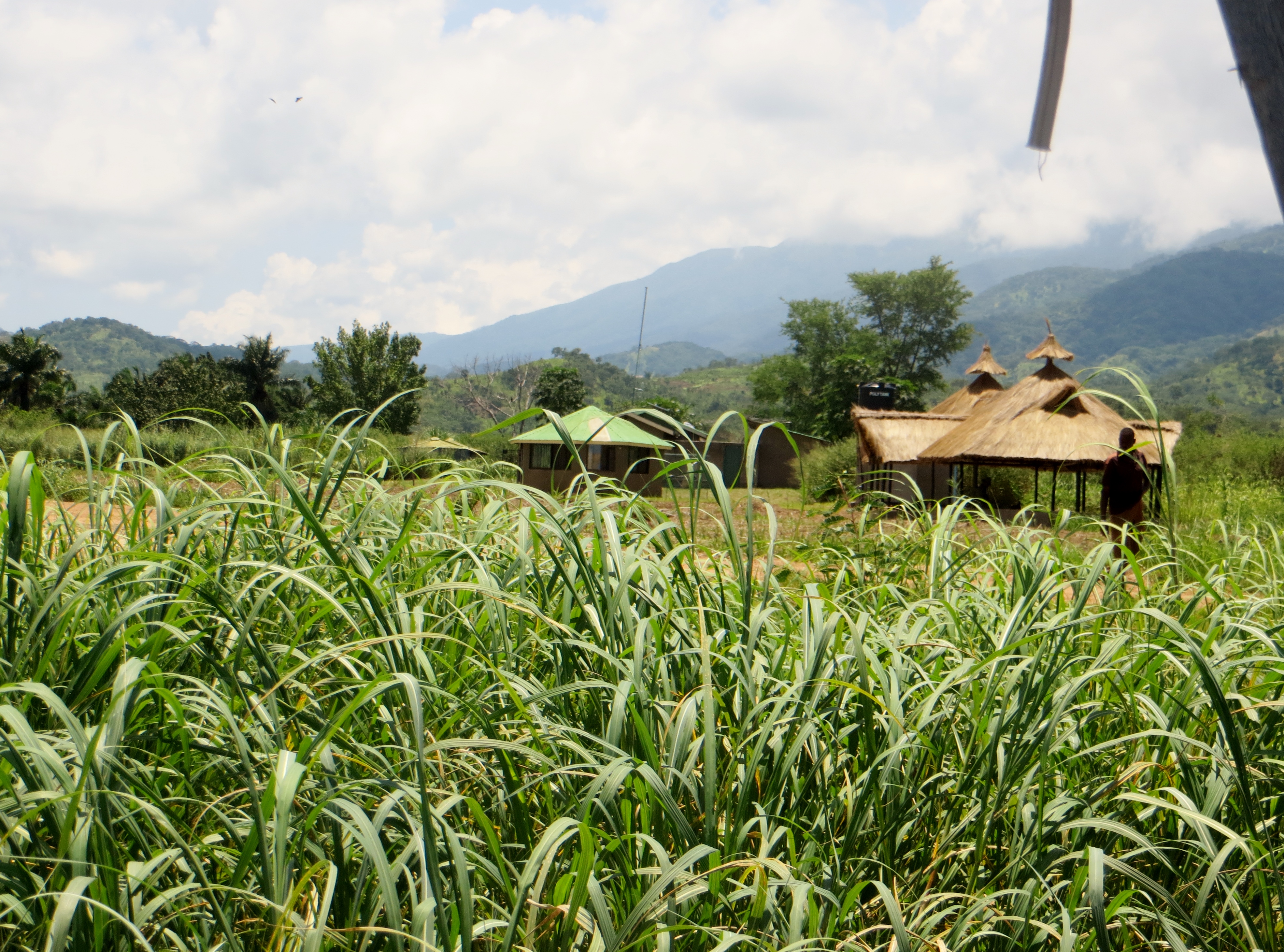

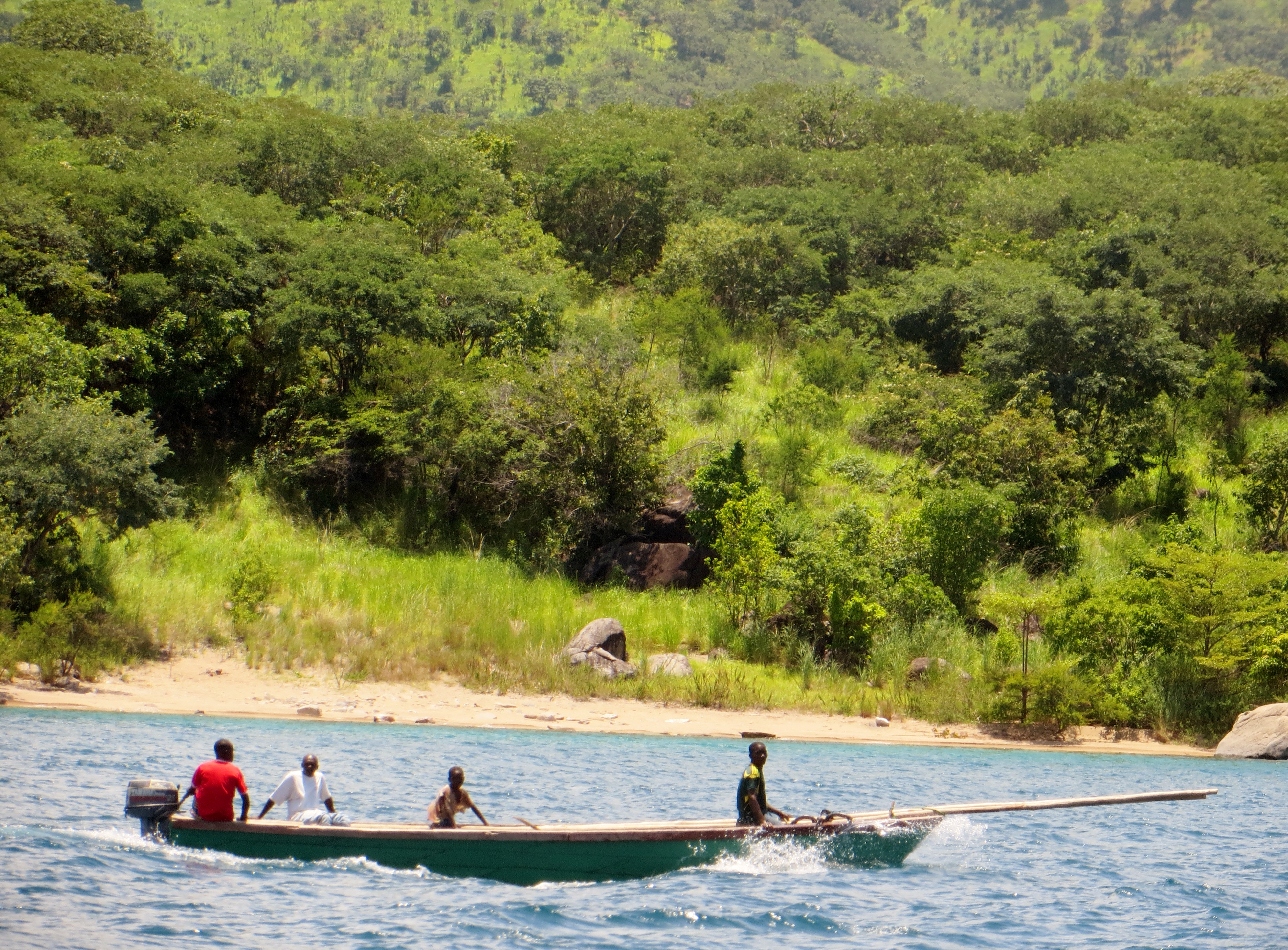

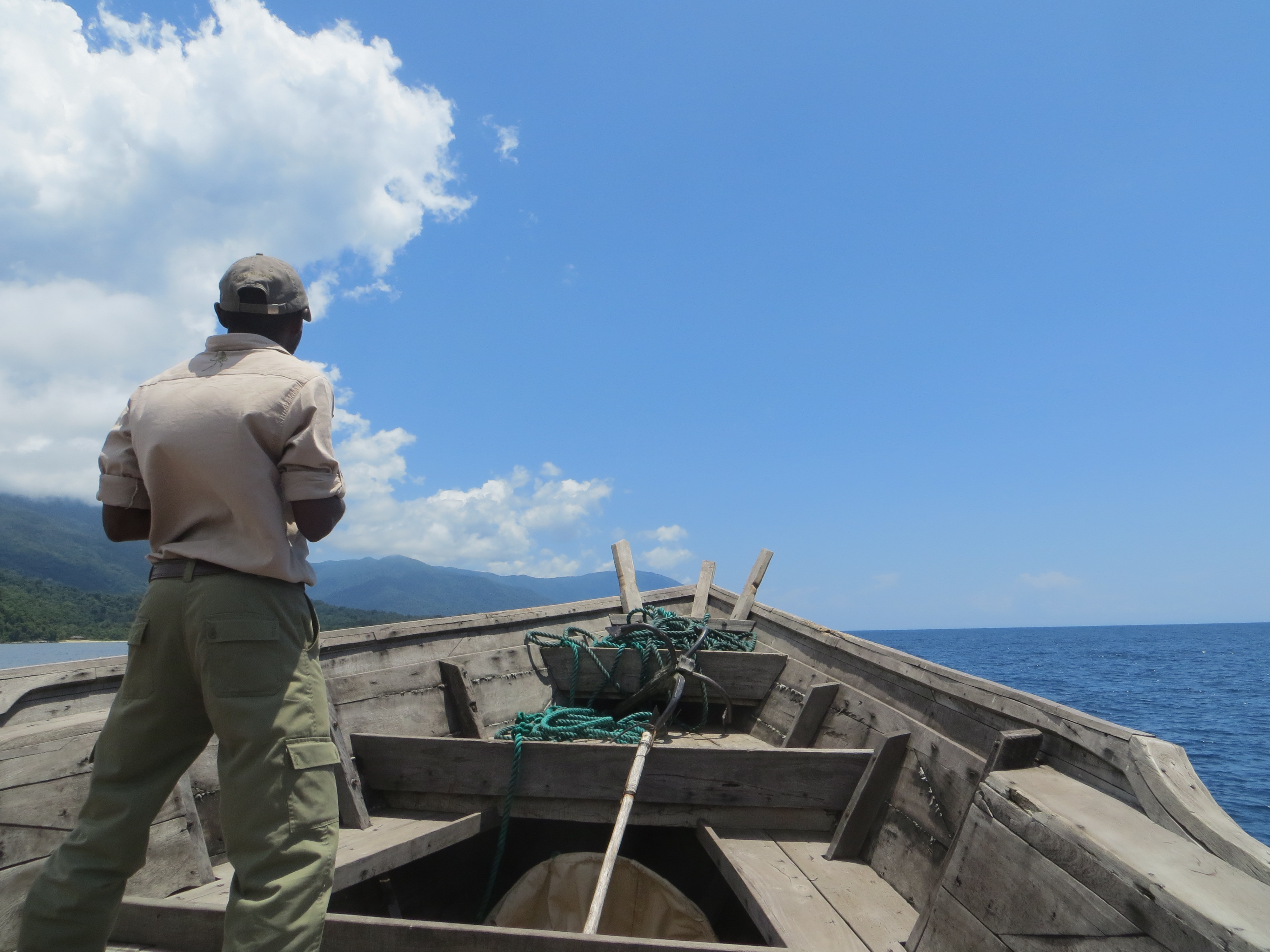


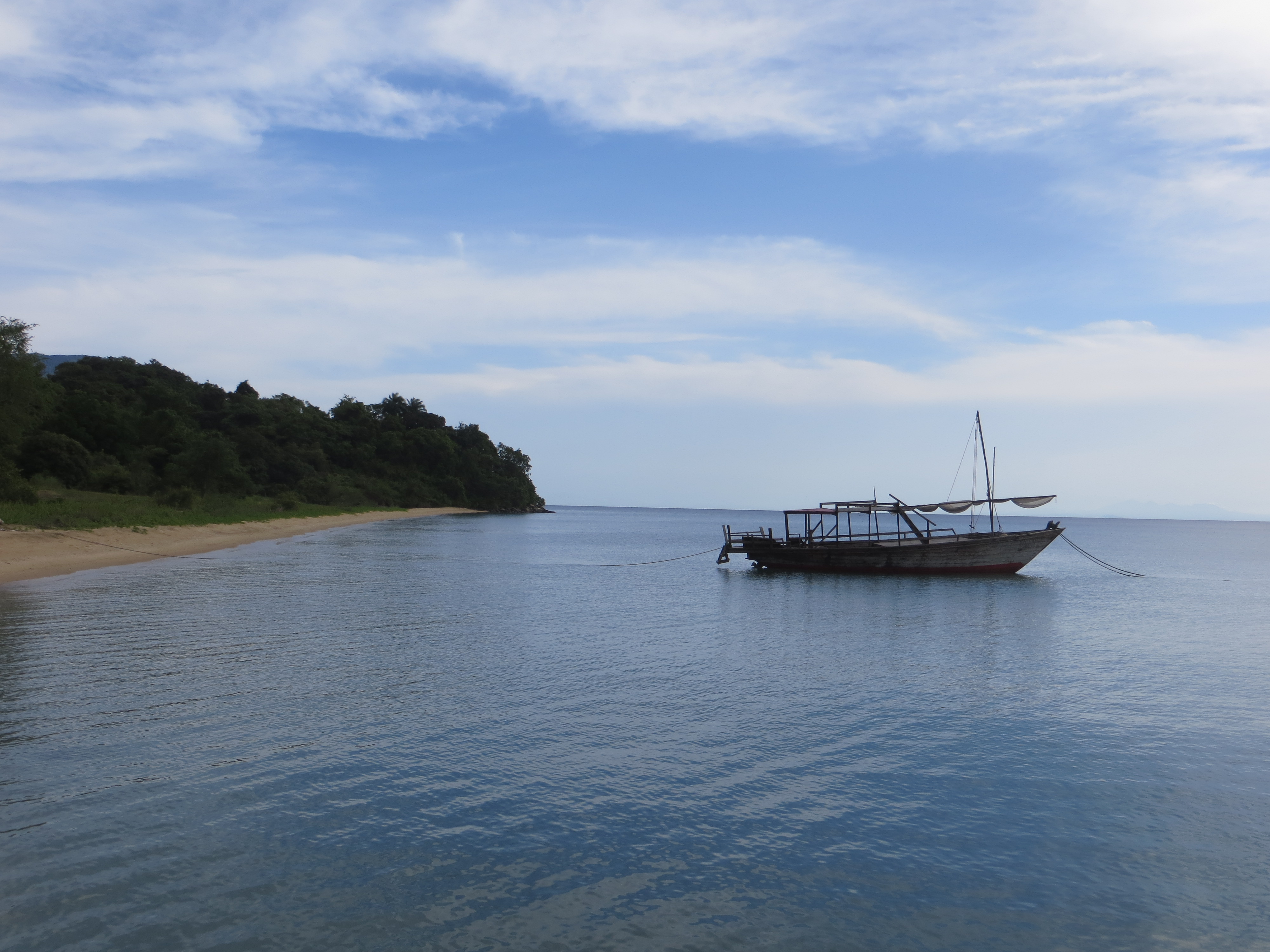







I said my farewells to the staff at Serengeti. Ken drove me to the Ndutu airstrip so I could continue on to Mahale. The flight was about 2.5 hours with two layovers to pick up additional passengers and to refuel. Once we arrived in Mahale, the airport is a small series of thatched roofed huts. Before leaving the airport, everyone who flies in has to sign a ledger filling in your, name, age, passport number, and nationality, No one checks the information to make sure it is true – so I guess we are dealing with an honor system. Once we signed in, we were free to get on the boat to go to the camp –Mahale Greystoke. The boat ride is about an hour.
At the airport our guides introduced themselves: Butati and Mwiga. I was thrilled to meet Mwiga because I had heard so much about him. I was told by Ken, my guide in Serengeti, that Mwiga was born and raised in Mahale and he knows the chimps. He acts like a chimp. I was told to look for him and try to get in his group. So I was more than thrilled to see him and exclaimed, “So you are Mwiga! I was told to ask for you by Ken!” He laughed and said, “Ken from Nomad Serengeti – we had so much fun when he was here!”
Ken had been charged by one of the chimpanzees named Christmas. The chimp kept circling him while carrying a large stick and shaking it at him. Ken was terrified and Mwiga just kept whispering to him to stay calm and show no fear. Christmas just likes to show off for the others. Eventually Christmas got bored and threw down the stick and slapped Ken on the leg before running off.
Lake Tanganyika is crystal clear. It is the second largest fresh water lake in the world. The largest is in Siberia. On the boat ride in, we made our afternoon plans: we’d take the boat out around 4:30 and go to an area in the lake that is 400 meters deep to swim. It is safe to swim in the deep areas because there will not be any crocodiles, hippos, or water snakes to bite us. After swimming we would go fishing and hopefully catch a Yellow Belly, which makes delicious sashimi.
We got to the camp which is absolutely dreamy. It’s like you step into the pages of Robinson Caruso. My hut is made of the retired wood from old dhow boats and has a thatch roof. It is completely open except for tarp curtains that can be closed for privacy. There is mosquito netting around the bed. The hut has two stories and overlooks the beach. Each hut has a monkey box – a huge trunk with a padlock so that if a baboon gets inside he or she will not be able to steal your things.
As soon as I got to my room, I switched into my bathing suit and headed back to the main meeting area. There are couches and hammocks on the beach with a huge fire pit lined in rocks. A long dinner table and a bar. Just as I left my hut, the sky turned black and ominous, then there were loud rumblings of thunder. I had just made it to the main area and was sipping sangria when the rain came down in buckets. The wind picked up and suddenly hail began beating down on the roof. I sat and watched as the lake, which had been calm and blue, was now dark grey and being pummeled by hail. The water was very choppy as gusts of wind blew down tree limbs. The storm was quite scary and lovely at the same time. It was all over within 40 minutes and then the sky went back to a beautiful blue and so did the lake.
The managers Kate and Cameron, a young couple in their 30s (she is British and he is South African), had planned a welcome meeting at 4 with tea or coffee and cake. When Kate arrived at the meeting area she was surprised to see me there. I laughed and explained how I had just beaten the storm, but had enjoyed watching it from the couch. Within 10 minutes the others arrived: A couple from Scotland, Anne and James; a couple from Maine (US), Dave (British) and Pam (American); and a couple from London Jackie and Rob, but he is originally from South Africa – all are in their 60s or 70s. While we were sitting there talking about the camp, a vervet monkey came to say hello. So every day we will go chimp trekking and in the afternoons we can either go out and swim and fish, go out on kayaks, have a bush walk along the beach, or go game fishing.
The Scottish couple decided they wanted to rest and drink G&Ts while the rest of us decided to swim and fish since the water was now clear and the sky was bright blue again. So off we went with Butati and Mussa (the captain).
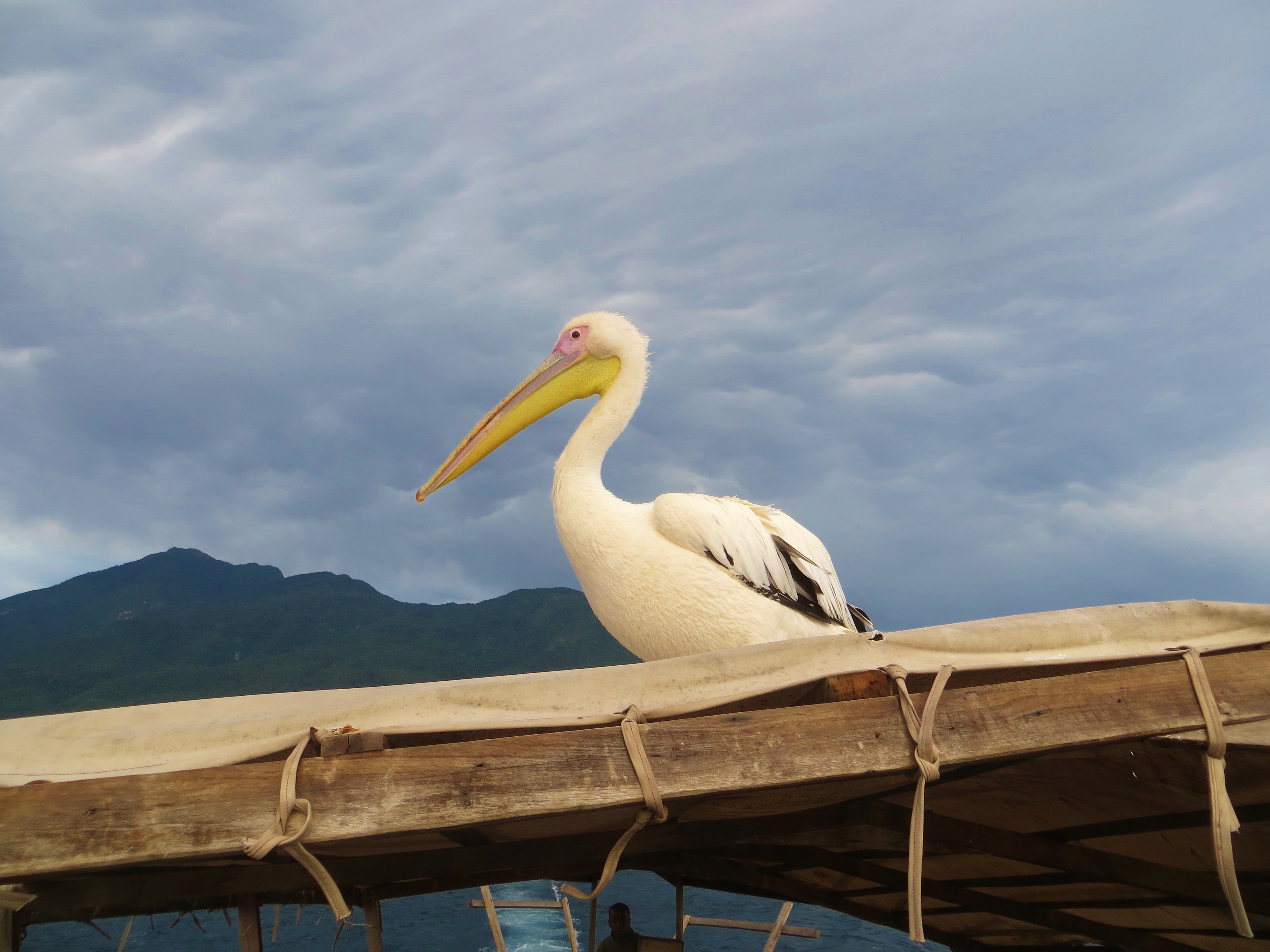
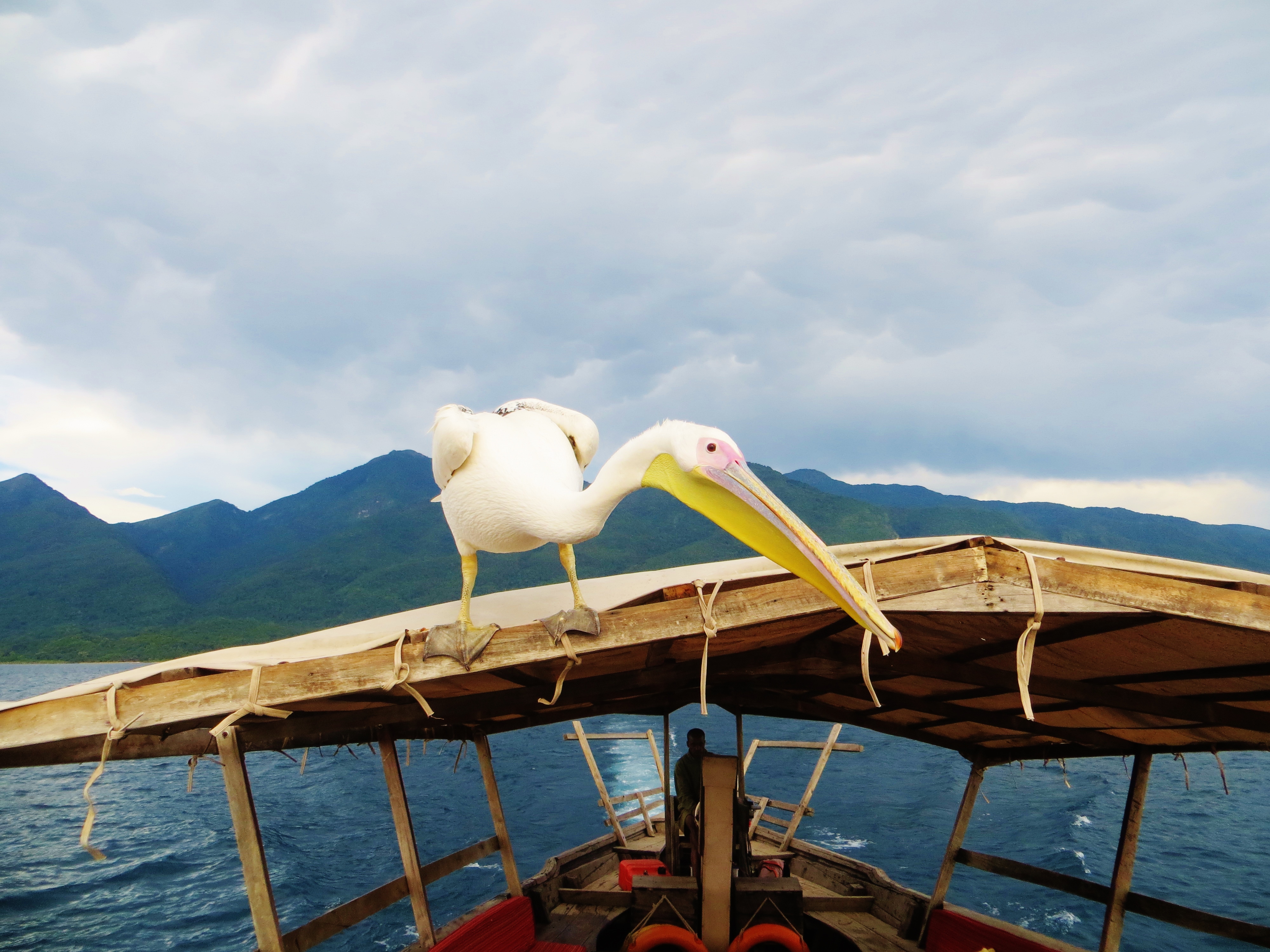
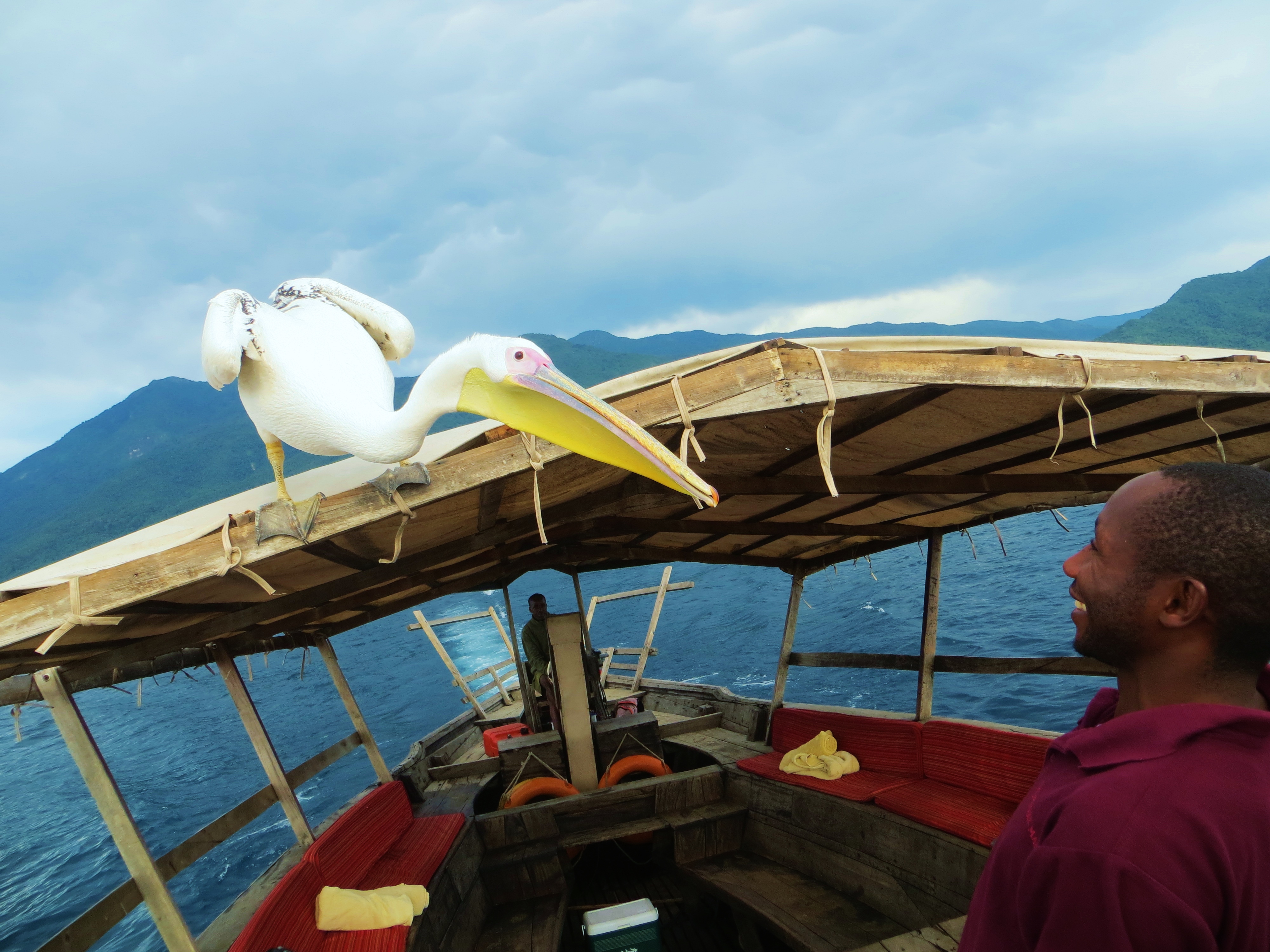
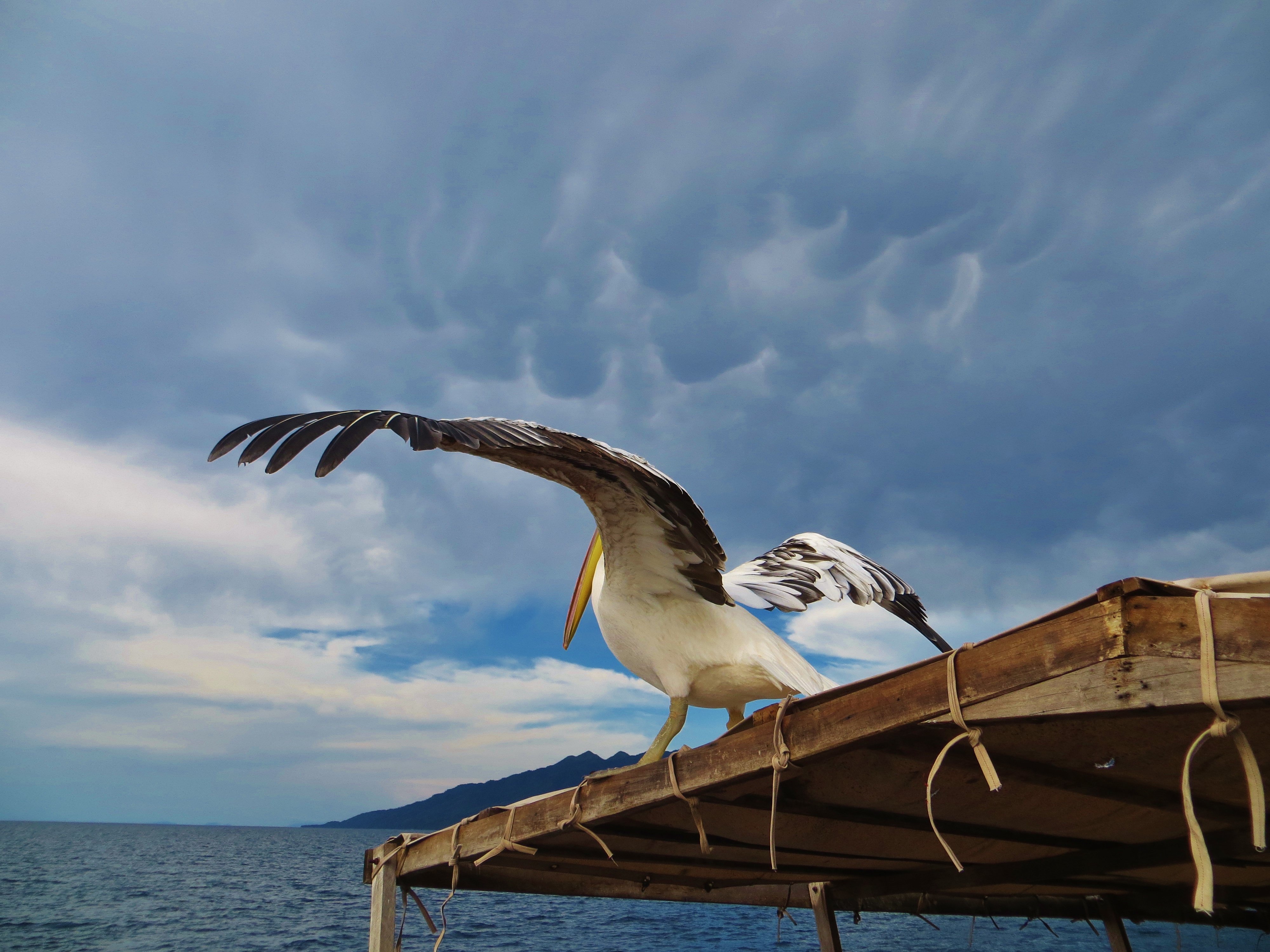
There is a white pelican that is quite famous. His name is Big Bird. Apparently a few years ago, he just showed up and has now become the camp mascot. He struts around following guests and trying to enter the rooms. We have been told that he likes to “taste” everything so we should not encourage him by letting him in our rooms. He has appeared on BBC News and CNN and is often written about in the British tabloids. When he appeared one day on the shore he was very young and could not fly. So a former manager used to run up and down the beach flapping his arms to encourage the bird to fly. There were no other pelicans to teach him how. Eventually he started flying and the manager strapped a go pro camera to his beak and that is when Big Bird went viral. He likes to waddle about and beg for food and fish.
When we took off in the boat, we were about 30 meters from shore when Big Bird landed on the roof of the boat with a loud, ungraceful thud. He likes to hitch a ride and try to steal any fish we catch. When we got to the deep part for swimming a few of us jumped in. The water temperature was in the 80s. From the storm and the wind, the water had a strong under current although it looked calm on top. We all were getting pulled pretty far from the boat. Thank goodness there was a tow line we could use to help pull ourselves back. I thought I was a pretty good swimmer, but that’s doing laps in a pool, this current was a different story.
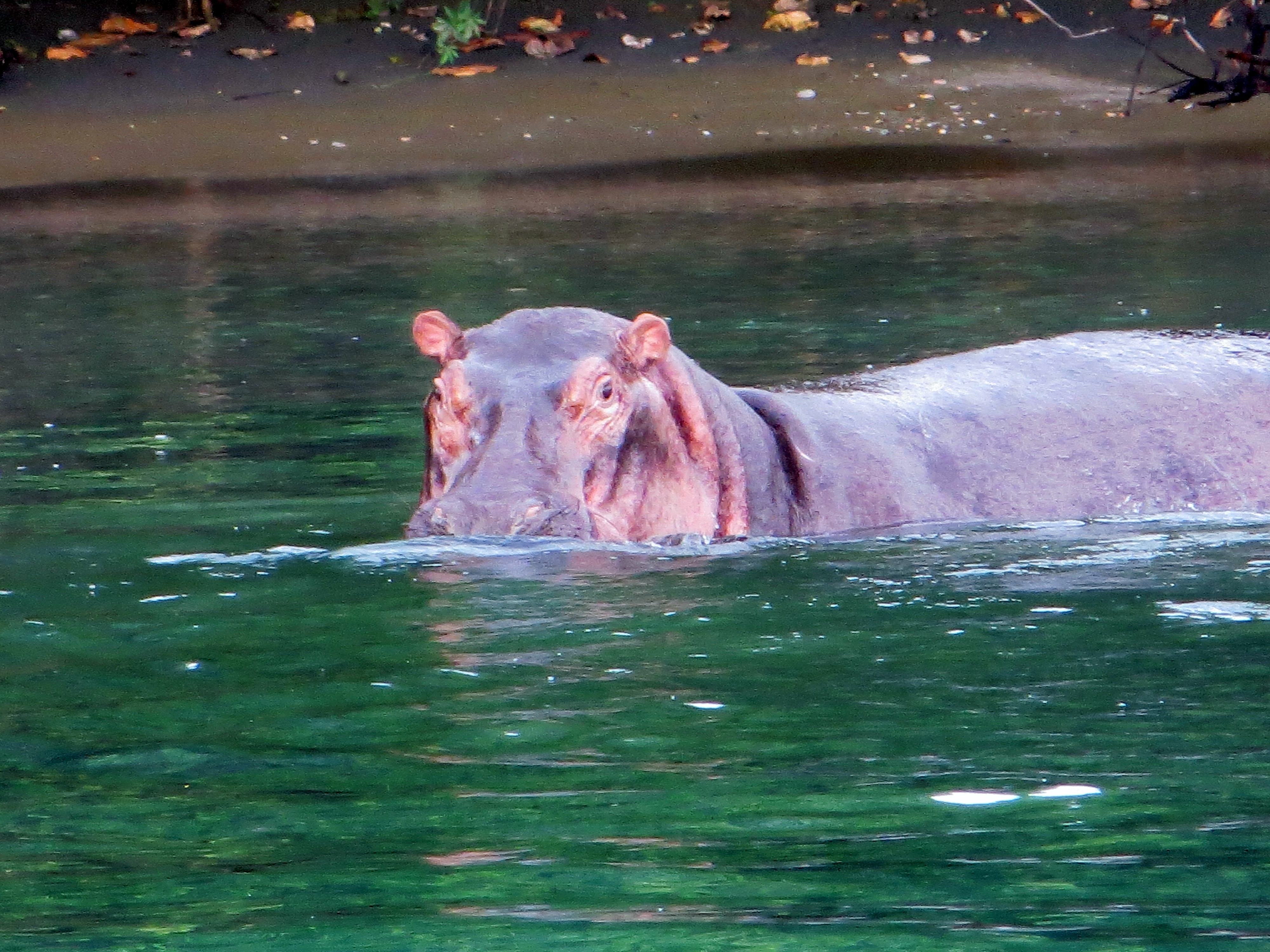
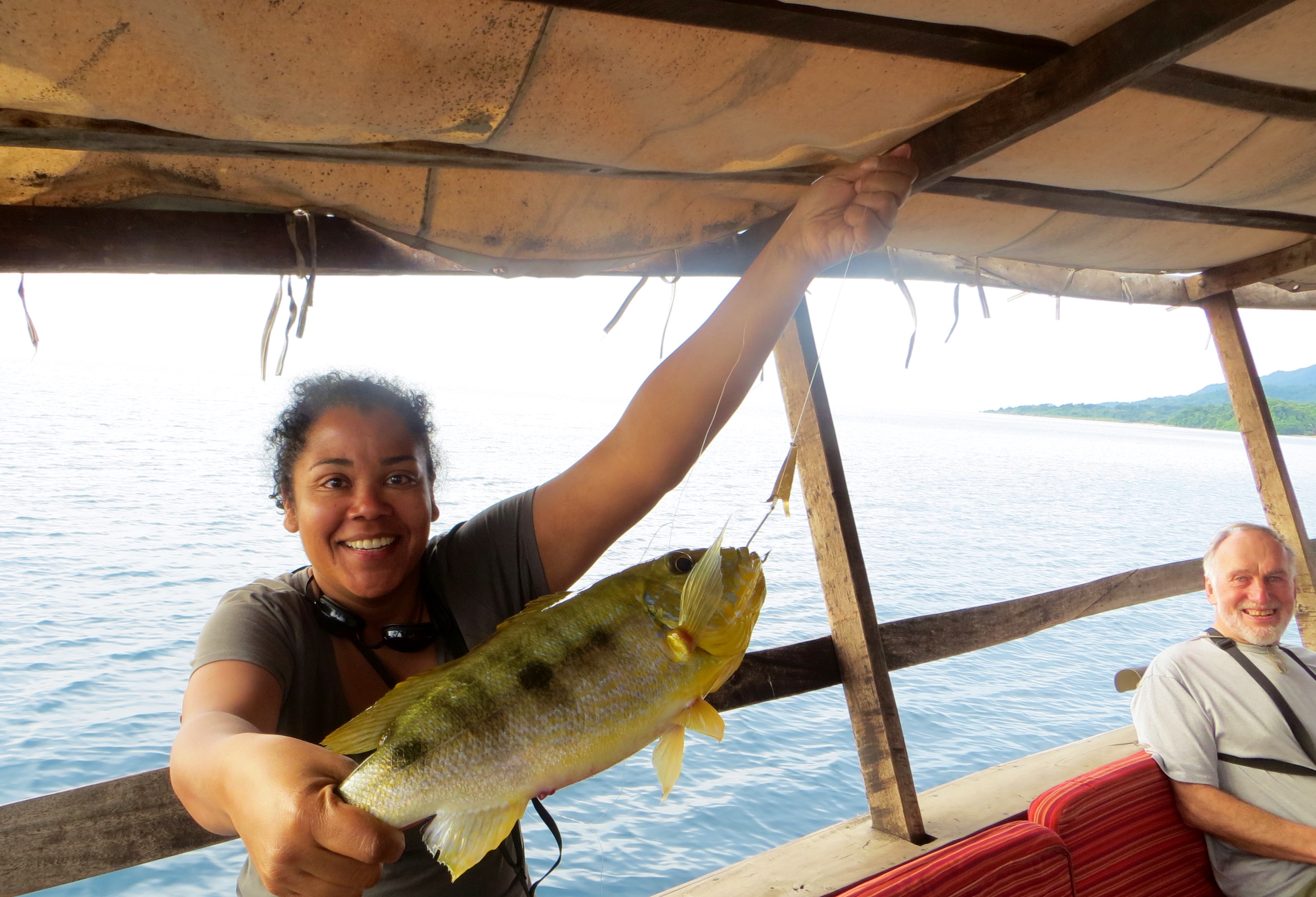
Back on the boat, we drove to more shallow water to fish. We saw hippos not too far away so we pulled our fishing lines out went over closer to see them better. The hippo did not like it so he started rearing up and displaying. When he realized we were not a threat, he moved on and we went back to fishing. I was lucky and caught a Yellow Belly. Then Rob, the English/South African, caught a tiny fish that Big Bird quickly reached for with his big beak and grabbed. The hook was still in the fish, which got caught in the soft tissue part of his beak. Like a naughty pet who just tried to eat his owner’s shoe, he allowed Rob and Butati to hold his beak open and remove the hook and the fish. The sharp edge of Big Bird’s beak cut Robs hand. He laughed and said he was going to sue. I laughed and said Big Bird would pay him with a pound of feathers.
When we got back to shore Butati gave Big Bird the small fish, but mine was turned into sashimi for our sundowner cocktails and it was delicious.
At 7pm, Mwiga and Butati introduced us to the trackers who would scout for the chimps. They were Mattias, Hassan, and Hussain. Mwiga explained the rules: no strong perfumes, no touching the chimps, do not litter or eat anything in front of the chimps, do not run if they charge, and do not wear any animal prints of t-shirts with pictures of animals. One lady had worn a leopard print T-shirt and it drove one of the chimps to violence. She had to take off the T-shirt or risk a stoning. When we are near the chimps, we will have to wear surgical masks to avoid contaminating them with our germs. After the talk, we went to dinner and it was YUMMMMMMY!!
Now, off to bed.

 Pack Your Bag and Go!