The Killing Fields and More
1October 1, 2014 by vickimrichardson
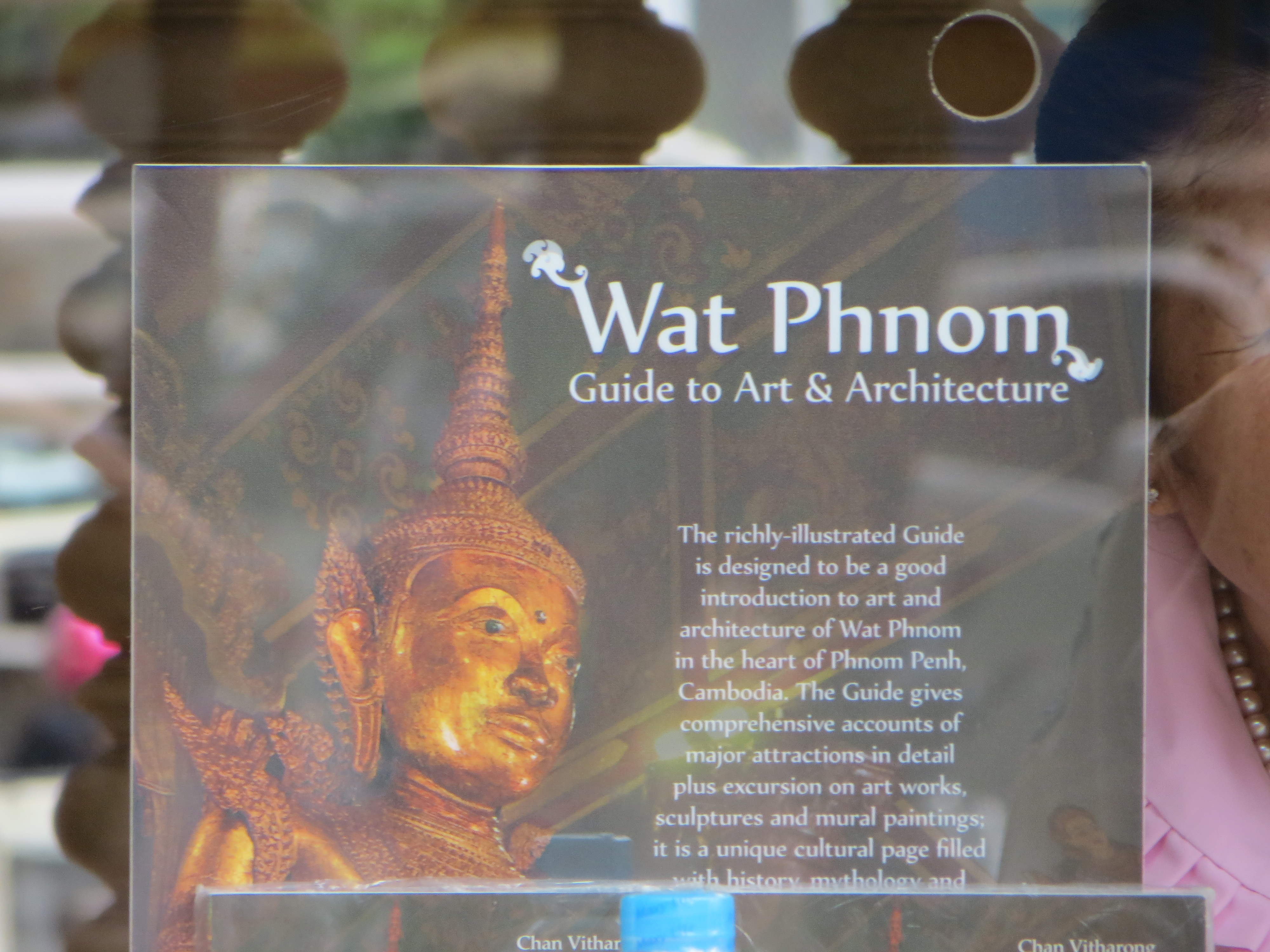
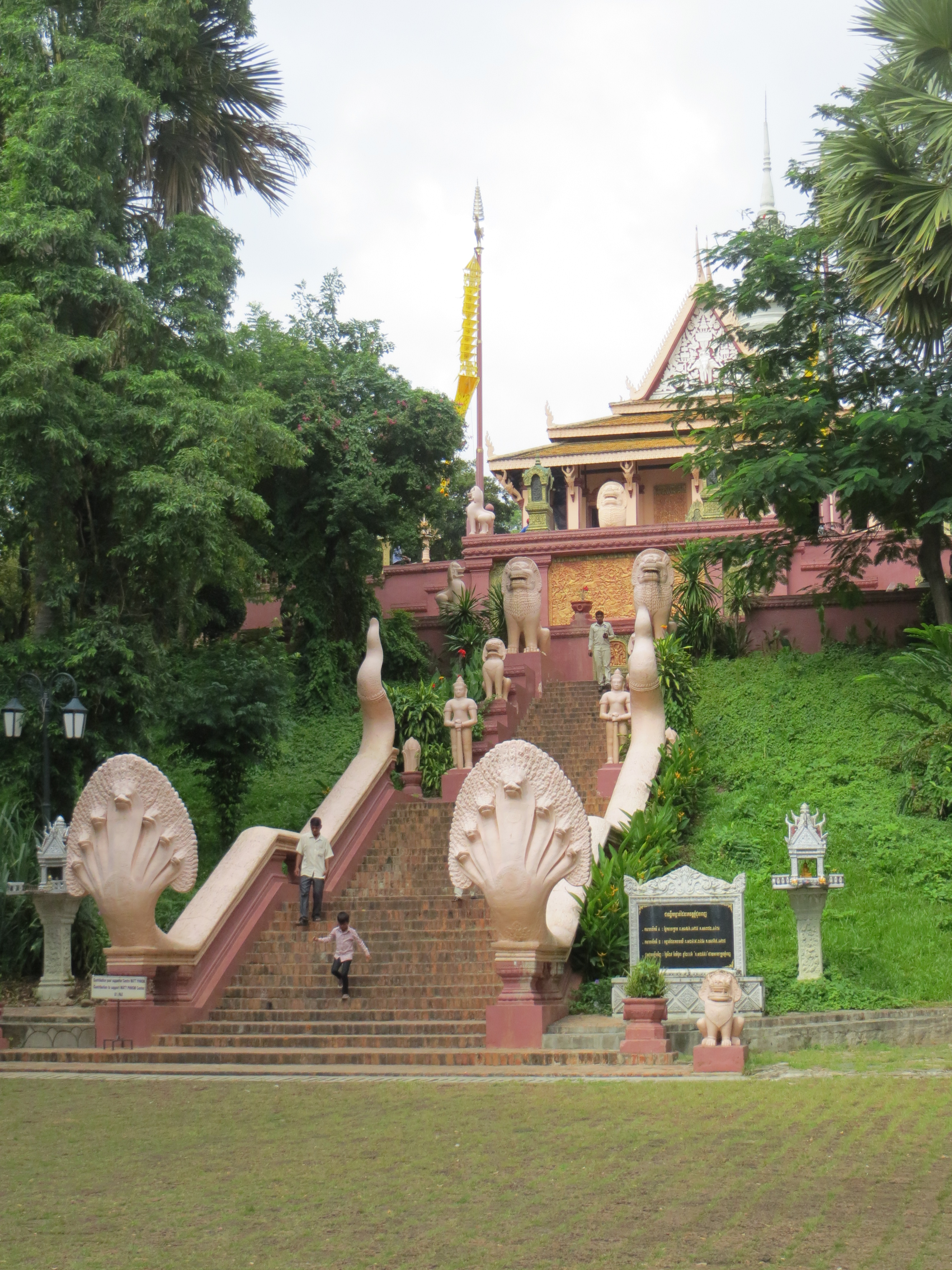



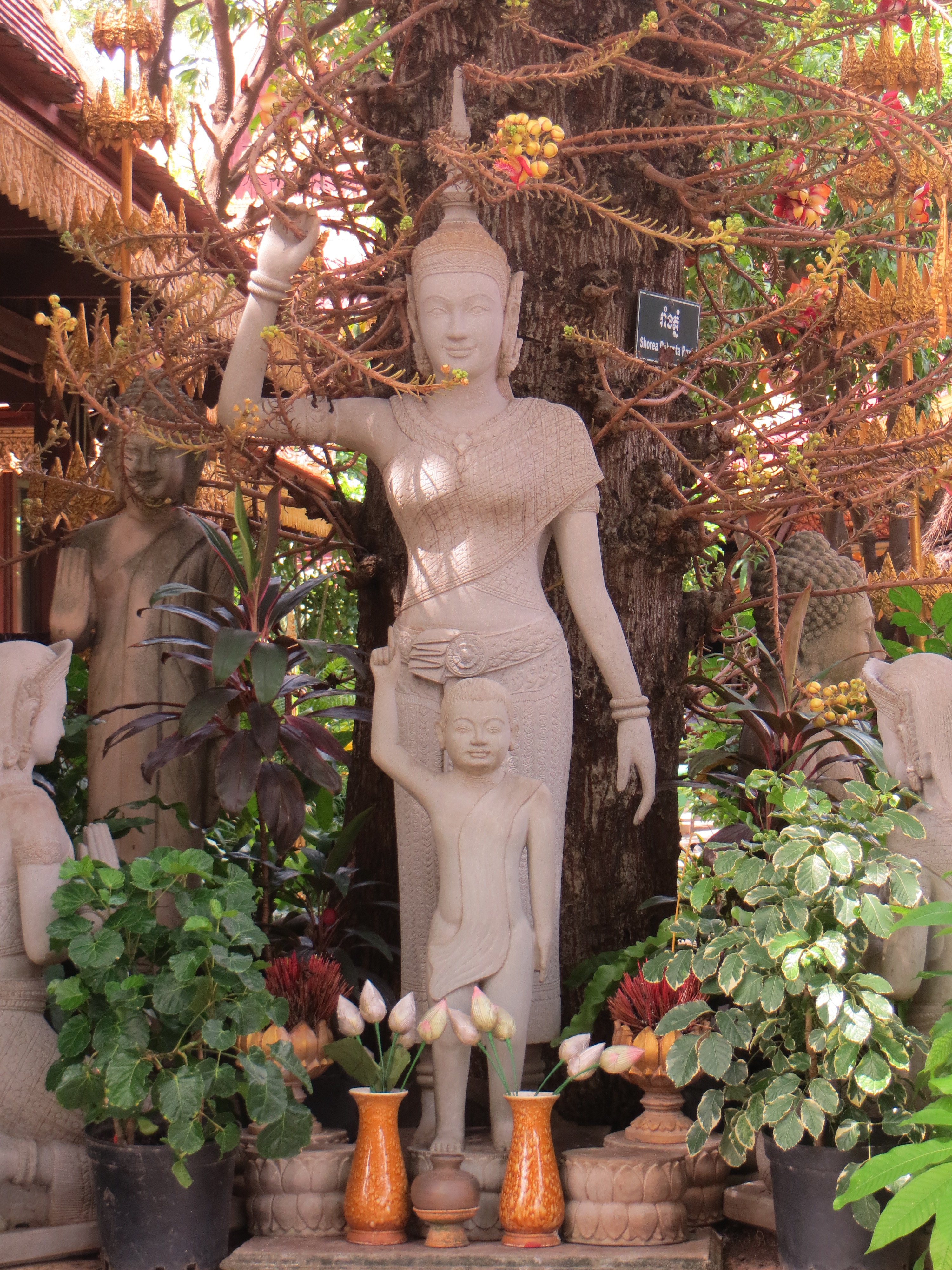







In the morning, I booked a private guide and driver through Mango Cambodia Tours to take me on a city tour and then go to The Killing Fields. The beginning of the tour was interesting and consisted of the usual pagodas, monks, and royal palaces with lots of ornate architecture and gold and jade statues. The most interesting fact learned was the former King Sihanouk before abdicating his throne to his son – the current King Sihamoni – announced that he thought love between two men and two women was ok. Belief is that his son is gay. Before returning to Cambodia to claim his new kingdom he had been a ballet dancer in NYC. Although the current king is 60 years he is often photographed dancing and partying in the ex-pat bars. His Dorian grey portrait must be safely locked away aging because the photos I was shown look like he is in his 30s – only proving that hetero love and procreating ages. Although no one here will admit that he is gay … well you do the math.
Now on to the most interesting and disturbing part of the tour:
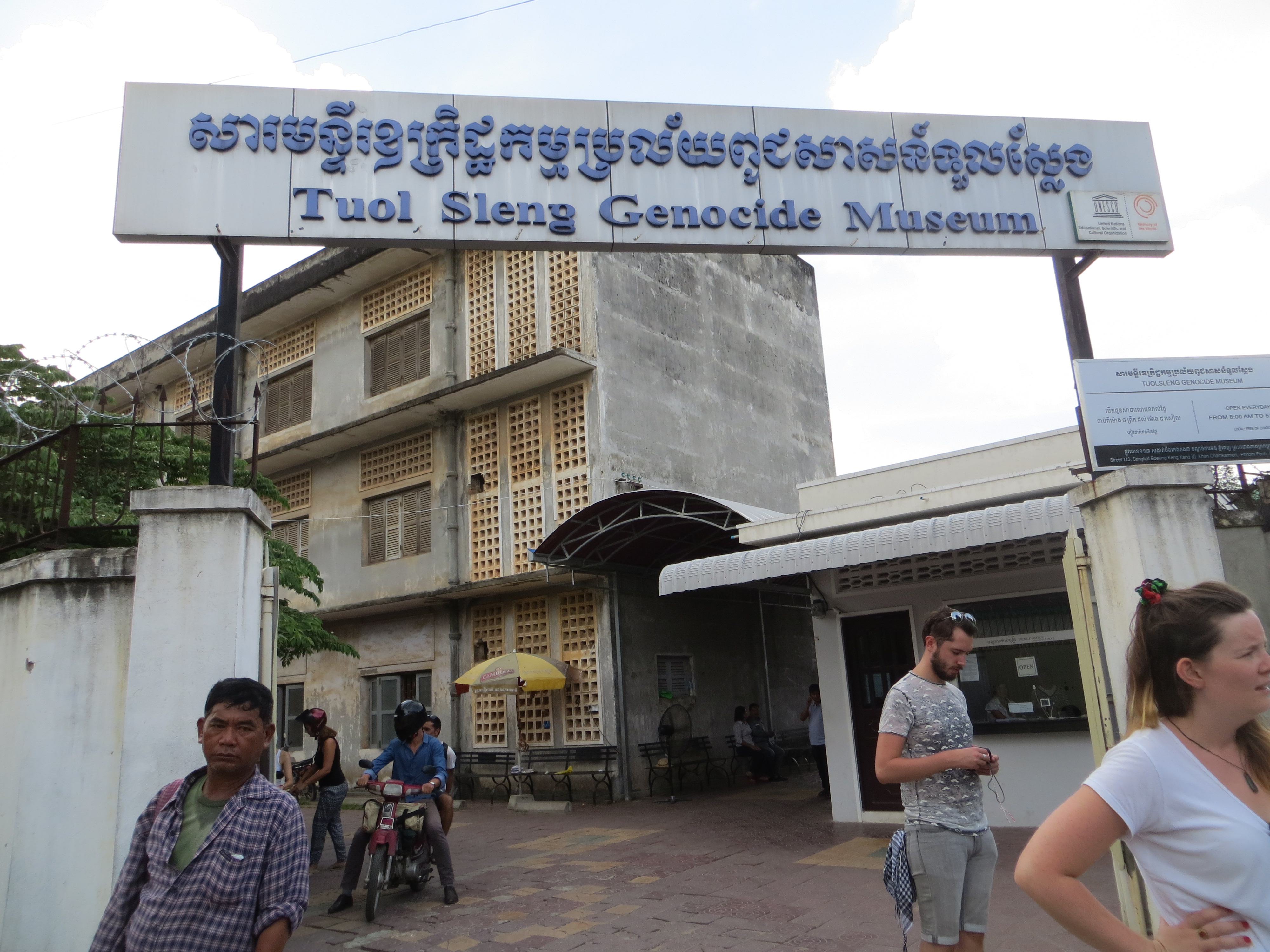
The once Tuol Svay Pray High School was probably a building that echoed the voices and laughter of students with a promising future. The halls were filled with their dreams and petty gossip. Every school has its leaders of mean girls and the jocks they adore. Now the high school – a ghost-filled shell – sits on a dusty road on the outskirts of Phnom Penh. In 1976, the Khmer Rouge renamed the high school S-21 and turned it into a torture, interrogation and execution center. Of the 14,000 people known to have entered, only seven survived. Two of which I had the honor to meet. Similar to their Nazi forerunners, the Khmer Rouge carefully transcribed the prisoners’ interrogations and photographed the inmates creating a disturbing and vivid archive of their chilling control. The portraits and confessions tell a frightening tale of shock, resignation, confusion, defiance and terror.
I went to Auschwitz in 2001. I will never forget the images I saw of the piles of eyeglasses, clothing, suitcases, and rugs that were made from the hair collected from the prisoners. I remember thinking how awful humans are. Then to come here and witness the same sort of atrocities is truly disheartening – not to mention the genocide museum in Rwanda that I went to, Apartheid/Robin Island in South Africa, and hell I can walk along the Rappahanock River by my mother’s house in Virginia and think about my own great-great grandfather walking along that same river to see his wife who had been sold during slavery. Humans are awful, which is why I do not give money to end global warming. I think the earth is just purging itself of its sickness: humans (but now I am preaching). When will we ever learn?
Although some of the most gruesome images to come out of Cambodia were those of the mass graves, the most haunting, I can honestly say are the portraits taken at S-21.
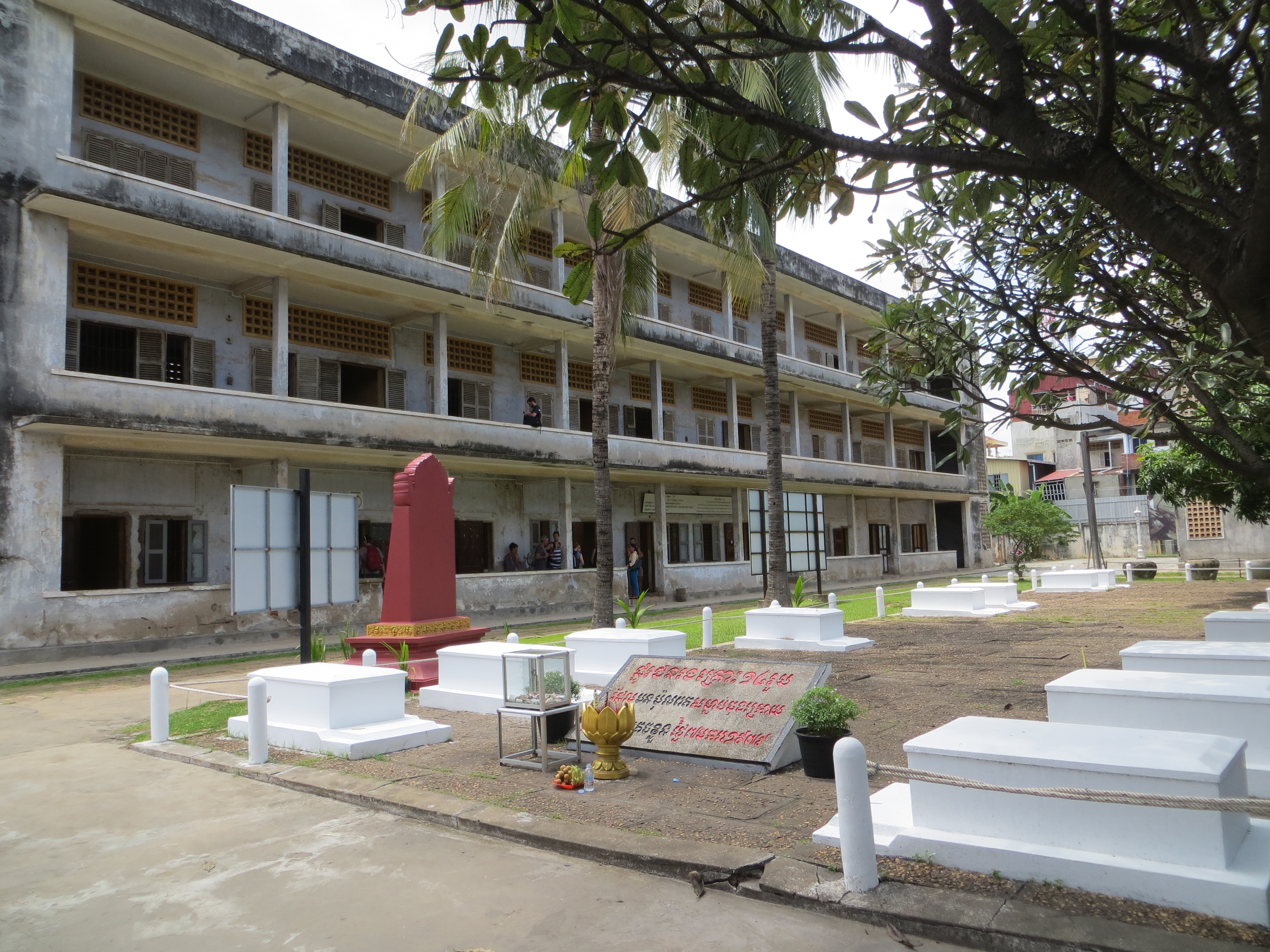
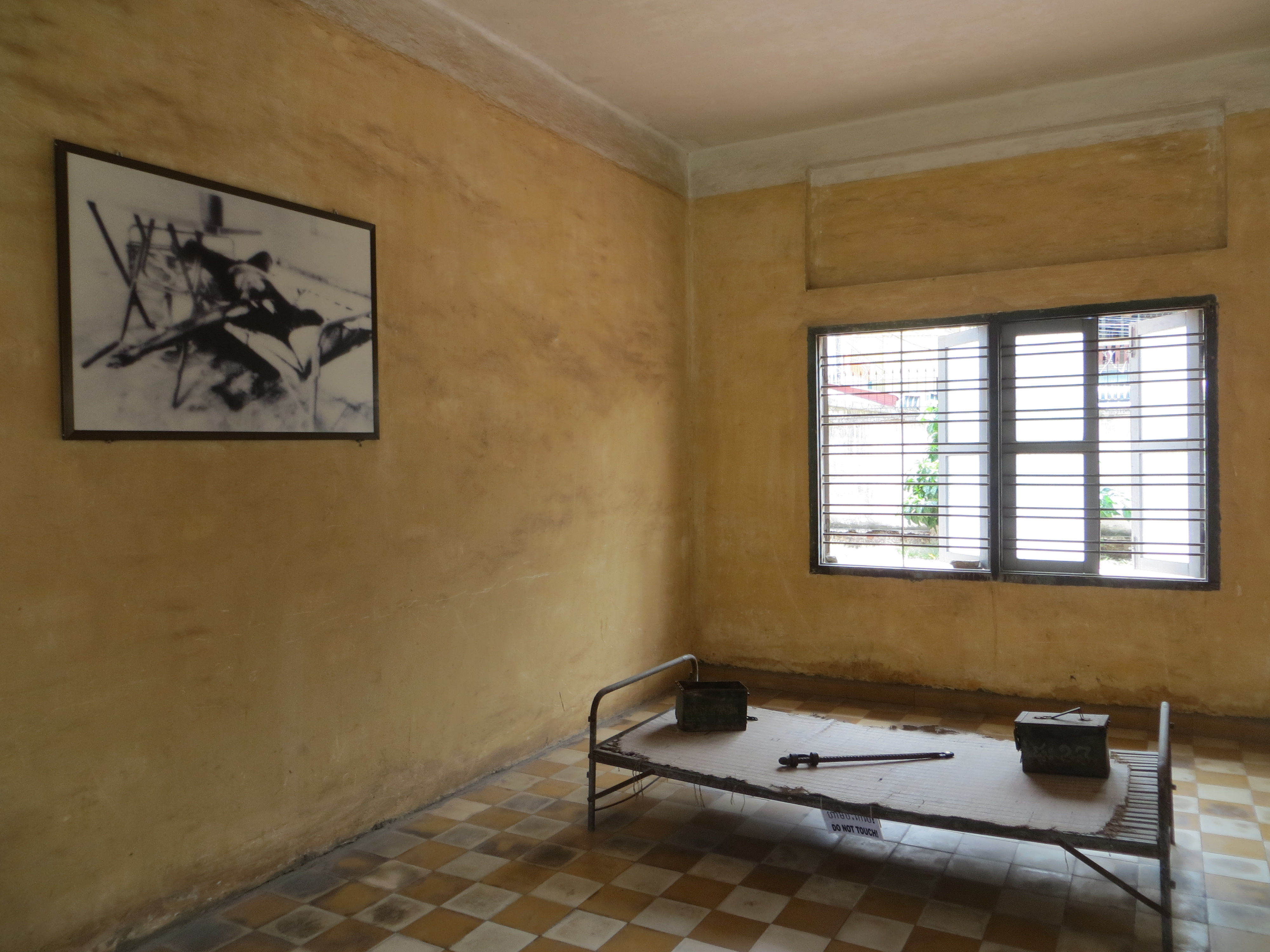
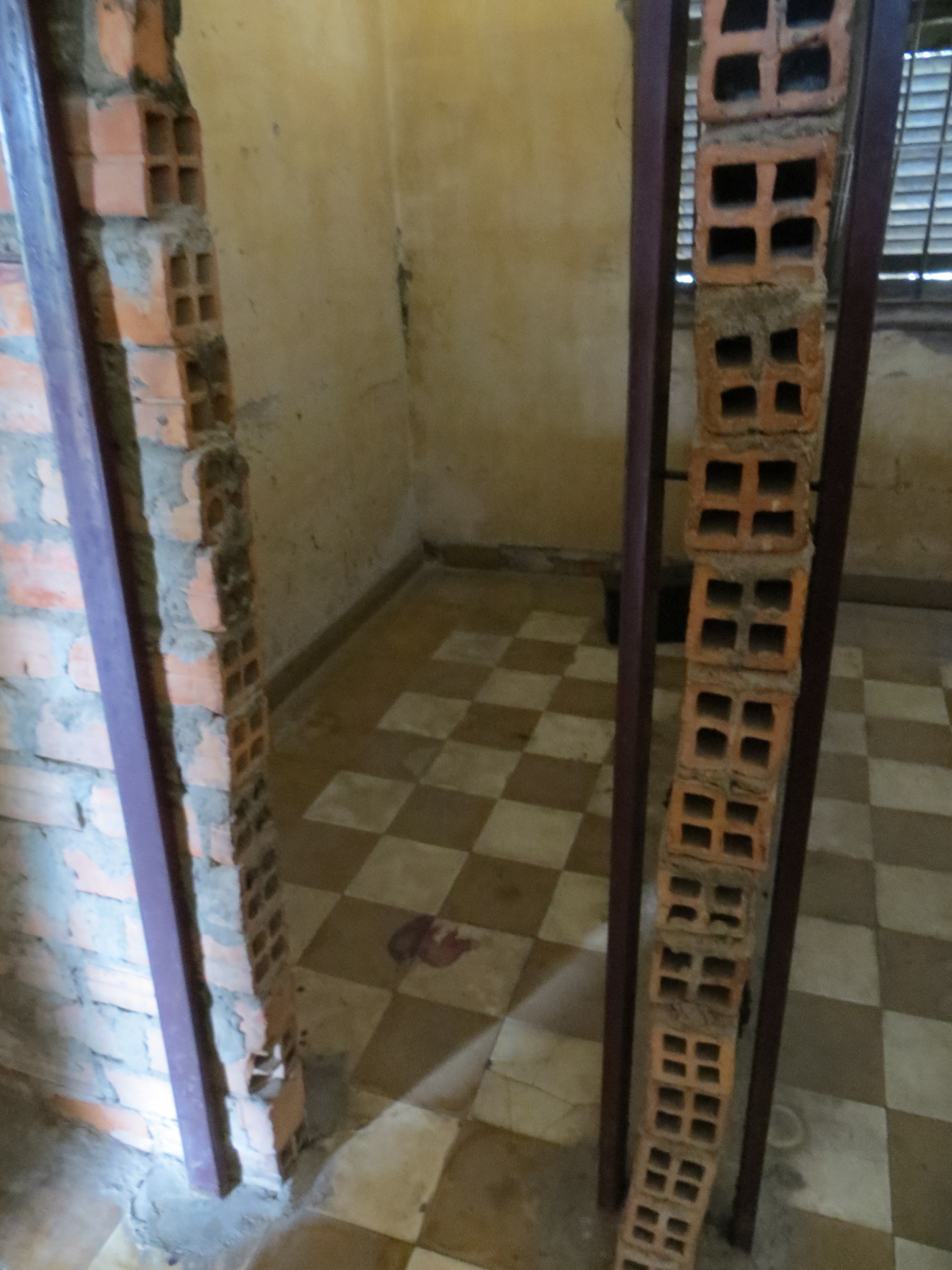
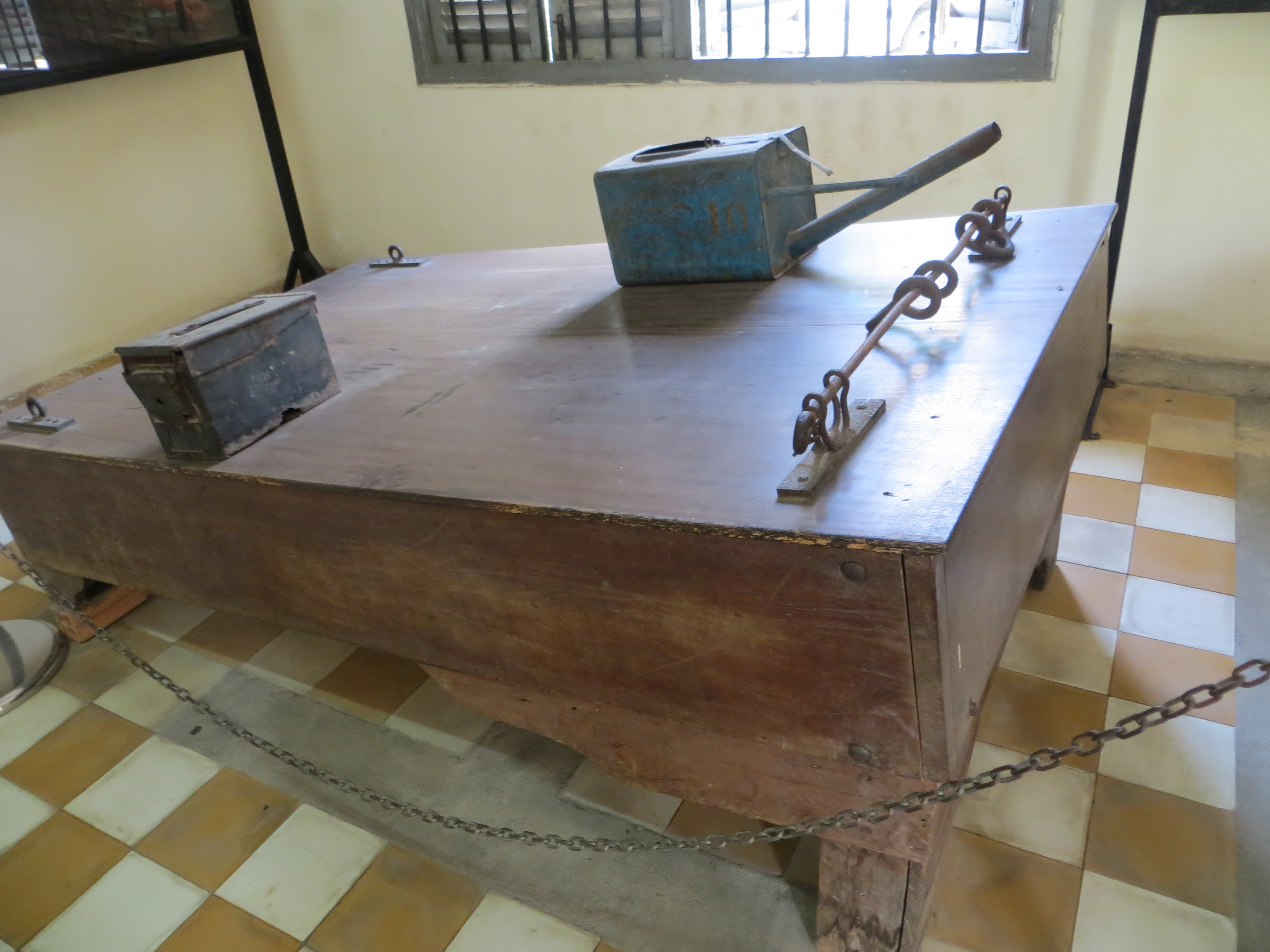
S-21 Prison is now known as the Tuol Sleng Museum of Genocide. Inside the gates, five white 3-story buildings face a grass courtyard with white coffin-like stone boxes filled with the remains of those who did not survive. There is a wooden frame towards the back that the Khmer Rouge used to hang the prisoners from and torture them. The ground-floor classrooms in one building have been left as they were in 1977. The spartan interrogation rooms are furnished with only a school desk-and-chair set that faces a steel bed frame with shackles at each end and a box of torture devices used to force confessions. On the wall hang grisly photographs of bloated, decomposing bodies chained to bed frames with puddles of blood underneath. Another building has these tiny brick cells that the prisoners were kept in. Some of the dried brownish blood stains still remain on the floor as a reminder.
In another building, similar to Auschwitz, the walls are covered with thousands of prisoner portraits complete with their respective number pinned to their clothing. At first glance, there is a photograph of a shirtless young man with a number, but upon closer inspection I realized that the number tag on his chest was safety pinned through his pectoral muscle. With a bruised face and a pad-locked chain around his neck, a boy stands with his arms at his sides and looks straight into the camera. I can only imagine his fear. There was a photo of a mother with her baby in her arms staring into the camera with a look of indignant resignation. The children were often thrown and bashed against the tree trunks in front of their mothers. The photographs and confessions were collected in order to prove to the Khmer Rouge leaders that their orders to rid the country of traitors had been followed.
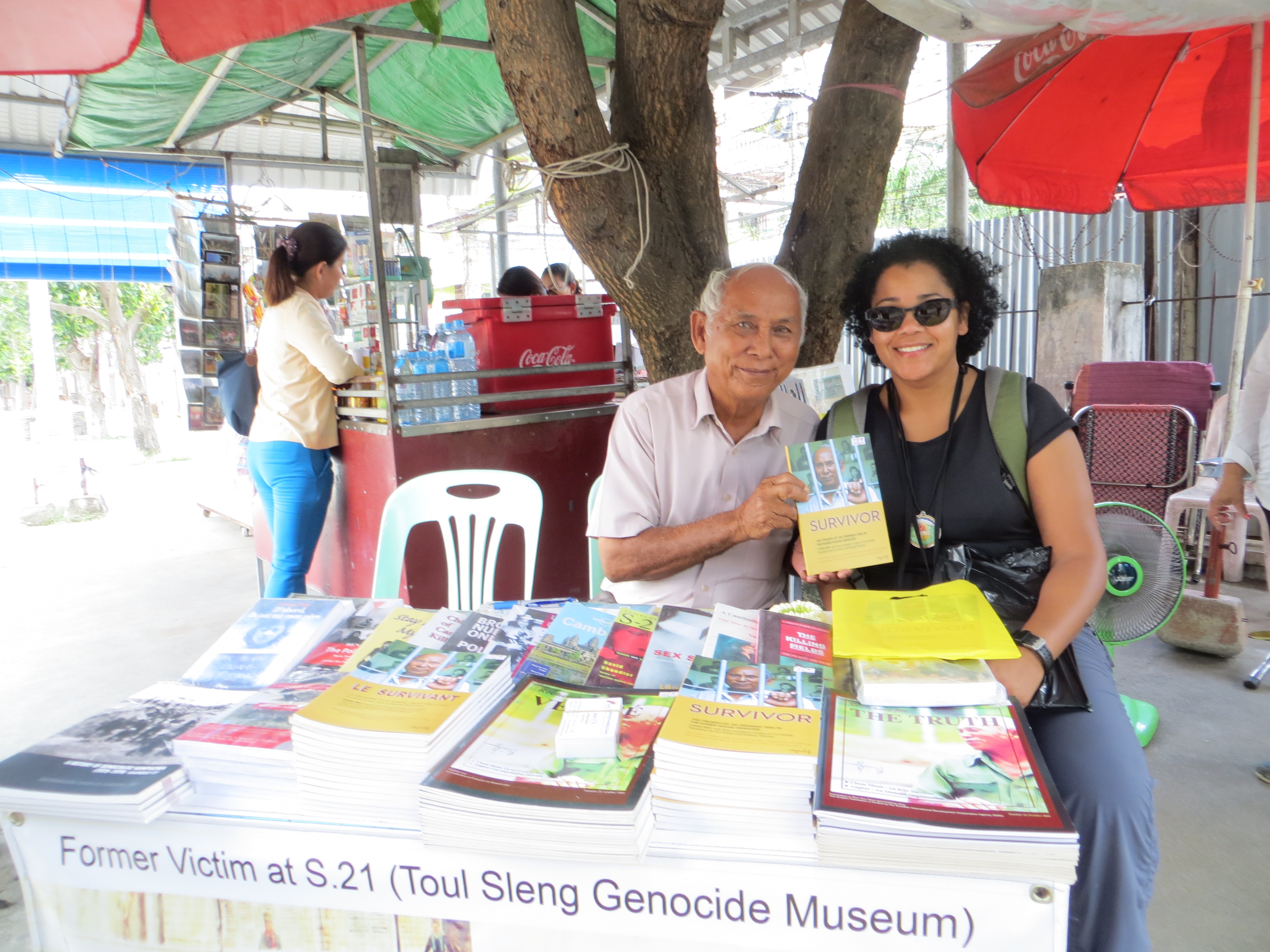
At the end of the tour of S-21, there are two survivors, Bou Meng (An artist who was tortured and then because of his artistic skills was used by the Khmer Rouge to paint portraits of Pol Pot. He later would paint pictures of the horrors that took place in S-21.) and Chum Mey (A mechanic whom the Khmer Rouge allowed to live because he could repair their typewriters they needed for the confessions, their jeeps and trucks, or whatever needed repair at the camp). The two sit at the exit of the museum where they sell their signed autobiographies to the museum visitors. I had the honor to meet them and shake their hands. I bought their books, which they graciously autographed. They invited me to take a photo with them, which I will cherish. They are a true testament to the will to survive.
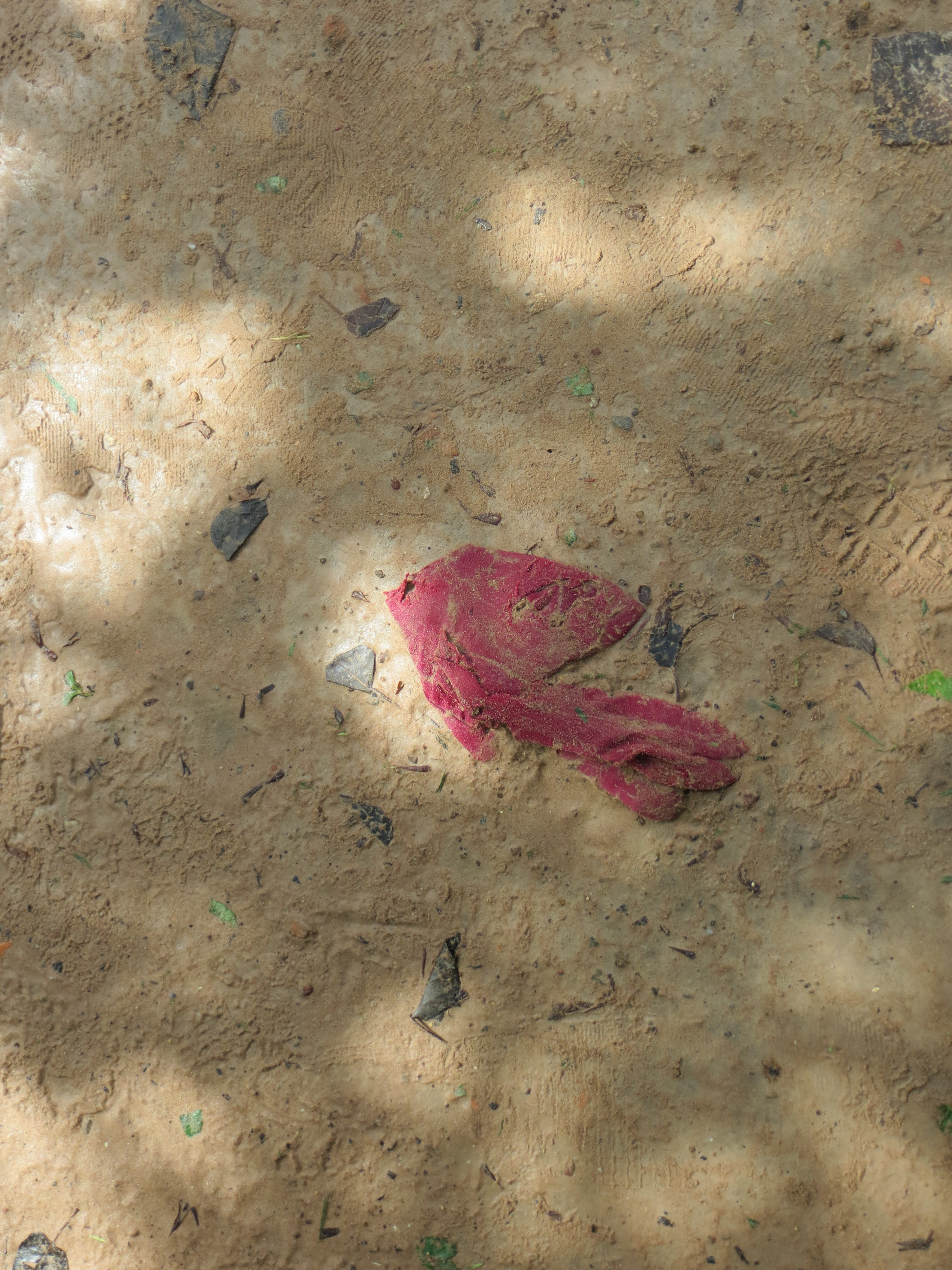
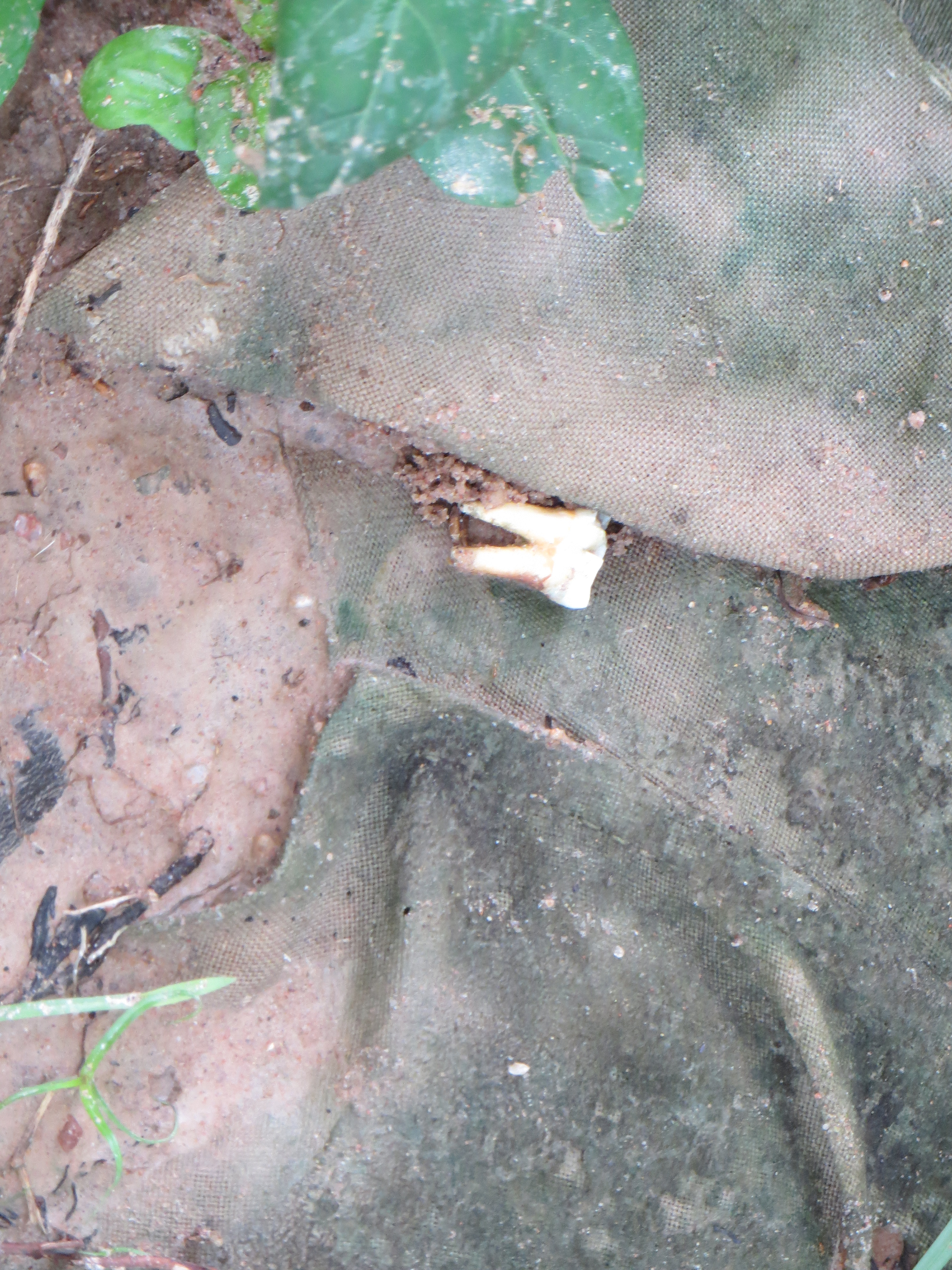
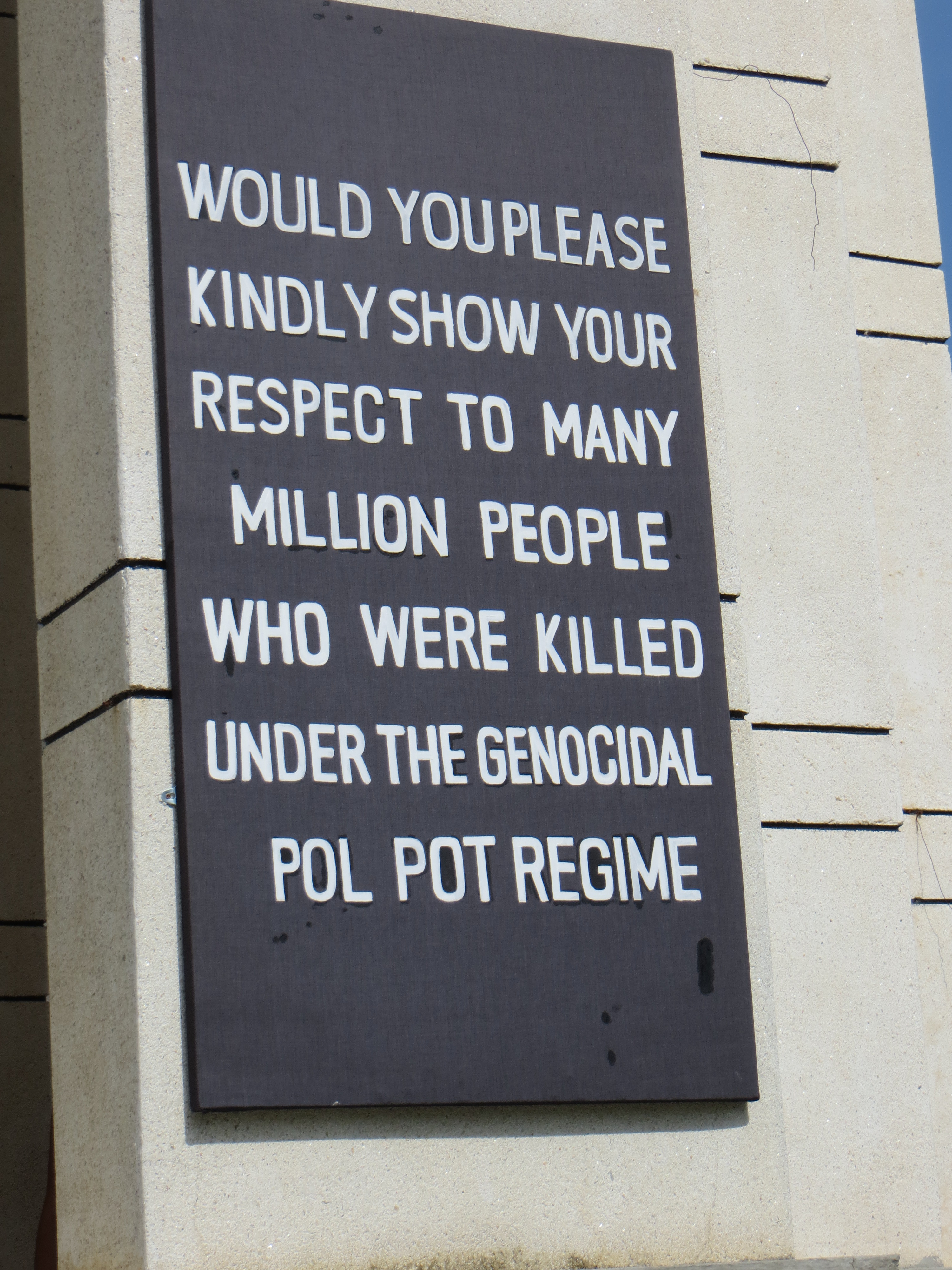
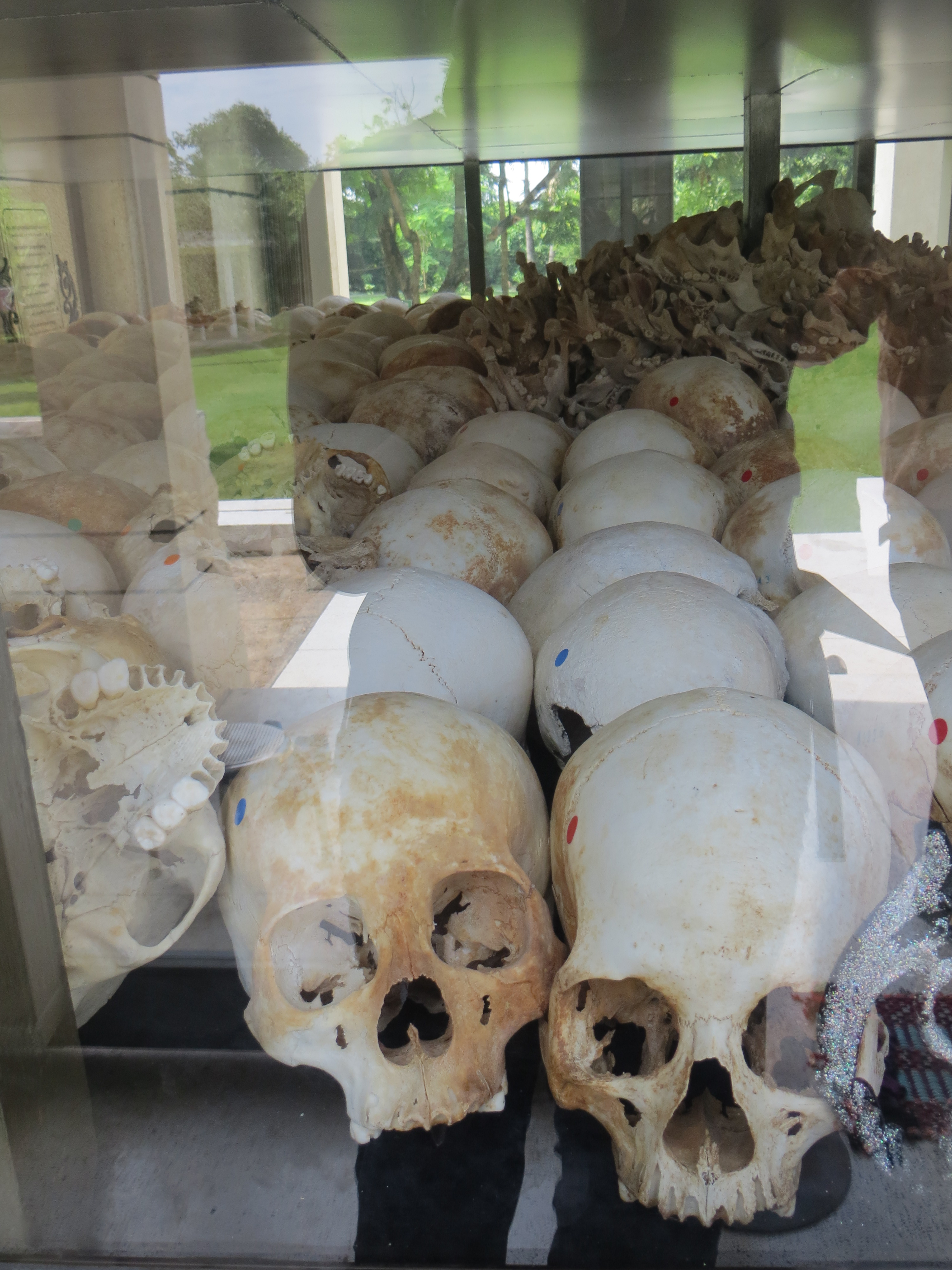
If S-21 was not bad enough, I went further along this journey to one of the Killing Fields. The Killing Field of Cheung Ek is situated 15 kilometers south-west of Phnom Penh and made famous by the film of the same name “The Killing Field”. Here more than 17,000 civilians were killed and buried in mass graves; many of them transported here after detention and torture in S-21. This place is a frightening reminder of the brutalities committed by the genocidal Khmer Rouge regime. In the center of the area is a 17 story glass stupa (In Cambodia, stupas are like stone tower-like mausoleums) which houses 8000 skulls exhumed from the mass graves. Earlier in the day it rained. With each rain, new body parts and remnants of clothing are unearthed as the dirt is washed away. Looking into the pits, I could see bone fragments, teeth, and pieces of clothing on the surface serving as a chilling reminder that only a small portion of the horror has come to light.
This is truly one of the saddest and most ghastly afternoons I have ever experienced. I rode back to my hotel in silence and in tears. My guide told me how he lost several family members in the prison and killing fields. His family had been educated so they were the first to go. He was born after the regime lost its power, but the devastating blow dealt to his family still resonates.
I went back to my hotel after such a somber afternoon to get ready for my Roving Dinner tout with Urban Forage. The show must go on…

 Pack Your Bag and Go!
Thank you for sharing. I can feel the pain of your written words.